Cyber Risk Strategy As businesses increasingly depend on digital systems, cloud services, and connected devices, cybersecurity risks have become an important business concern. A successful cyberattack can expose sensitive information, disrupt daily operations, damage a company’s reputation, and result in financial losses. Therefore, organizations need a clear and practical cyber risk strategy to identify and manage these threats effectively.
A well-planned strategy helps businesses understand which assets and systems are most important, assess potential threats, and determine which risks require immediate attention. In addition, it helps security teams choose appropriate controls and continuously monitor their risk environment. As a result, organizations can make better security decisions instead of responding to threats only after an incident occurs.
Moreover, effective cyber risk management is not limited to technology. It also involves employees, business processes, security policies, and ongoing improvement. In this guide, we will explore how organizations can develop a cybersecurity risk management strategy, assess and prioritize threats, create a practical risk management plan, and use risk analytics to strengthen their overall security.
What Is a Cyber Risk Strategy?
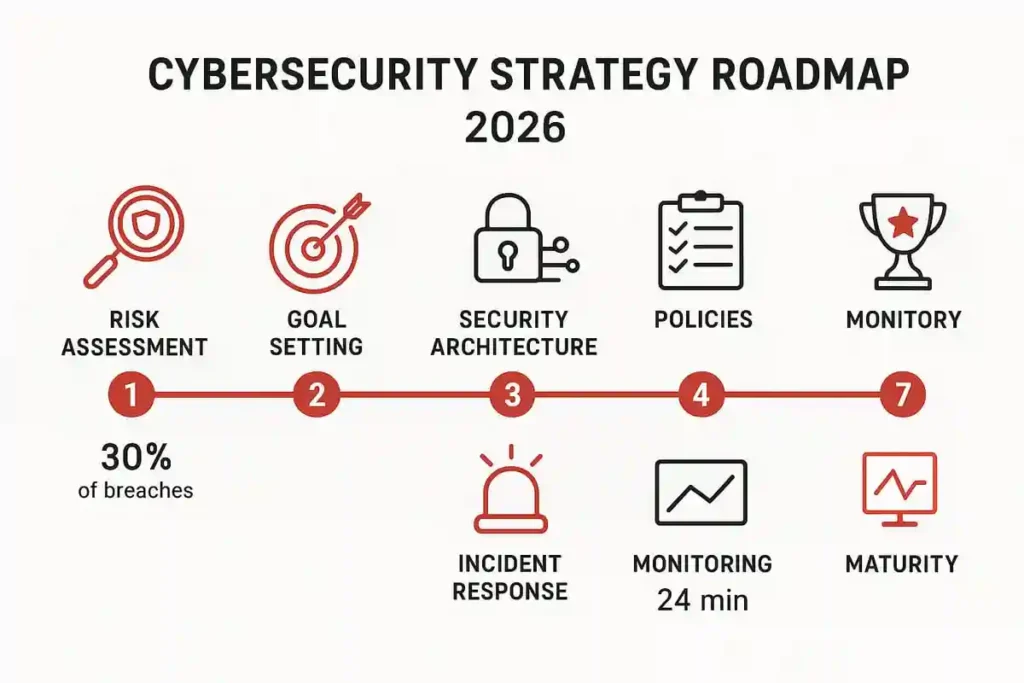
A cyber risk strategy is a structured approach that helps an organization identify, assess, prioritize, and manage cybersecurity threats. Instead of reacting to every security incident separately, businesses use a strategy to understand their most important risks and decide how those risks should be handled. In this way, security efforts remain aligned with business goals.
Moreover, a strong strategy considers more than technical vulnerabilities. It also looks at sensitive data, critical systems, employees, third-party vendors, business operations, and potential financial or reputational damage. Therefore, organizations can focus their resources on risks that could have the greatest impact.
A practical cybersecurity risk management strategy should also be flexible. Since cyber threats constantly change, organizations need to review their risks and security controls regularly. As new technologies, regulations, and attack methods emerge, the strategy should be updated accordingly.
Key Elements of a Cyber Risk Strategy
Several important elements work together to create an effective strategy. First, organizations need to identify their critical assets and understand the threats that could affect them. Next, they should assess the likelihood and potential impact of each risk.
After that, security teams can prioritize risks and select suitable controls. For example, an organization may use access controls, employee training, encryption, backups, monitoring, or incident response procedures to reduce exposure.
Furthermore, clear responsibilities are essential. Employees, managers, IT teams, and security leaders should understand their roles in protecting business information. Finally, organizations should continuously monitor their security environment and measure whether their controls are working effectively.
As a result, a well-designed cyber risk strategy gives businesses a practical way to make informed security decisions while reducing the potential impact of cyber threats.
How Does the Cybersecurity Risk Management Process Work?
The cybersecurity risk management process is a continuous method for finding, evaluating, and reducing security risks. Rather than treating cybersecurity as a one-time task, organizations should follow a repeatable process that adapts to new threats and business changes. In addition, this approach helps security teams use their time and resources more effectively.
Identify Critical Assets and Cyber Risks
First, an organization should identify the systems, applications, networks, devices, and data that are essential to its operations. For example, customer information, financial records, employee accounts, and cloud services may require stronger protection.
Next, security teams should identify potential threats and vulnerabilities affecting these assets. These may include phishing, ransomware, malware, stolen credentials, insider threats, software vulnerabilities, and third-party security issues. As a result, the organization gains a clearer picture of where its greatest exposure exists.
Assess and Prioritize Cyber Risks
Once threats have been identified, the next step is to determine how likely each risk is to occur and how serious its consequences could be. Therefore, teams can rank risks according to factors such as financial loss, operational disruption, data exposure, and reputational damage.
Furthermore, not every vulnerability requires an immediate response. By prioritizing risks based on likelihood and impact, organizations can focus their security budget on the issues that matter most.
Choose Cyber Risk Mitigation Controls
After risks are prioritized, organizations need to decide how each one should be handled. Depending on the situation, a business may reduce, avoid, transfer, or accept a particular risk.
For example, multi-factor authentication can reduce account compromise, while regular backups can limit the impact of ransomware. Similarly, employee awareness training can reduce the likelihood of successful phishing attacks. Consequently, the selected controls should directly address the organization’s highest-priority risks.
Monitor and Review Cyber Risks
Finally, cybersecurity risks should be monitored continuously. Threats, technologies, business processes, and vulnerabilities can change over time. Therefore, an effective risk management process requires regular assessments and reviews.
In addition, organizations should track security incidents, control performance, and important risk indicators. If a new threat emerges or an existing risk becomes more serious, the strategy should be adjusted. In this way, continuous monitoring keeps cybersecurity efforts relevant and supports long-term risk reduction.
How to Develop a Cybersecurity Risk Management Plan?
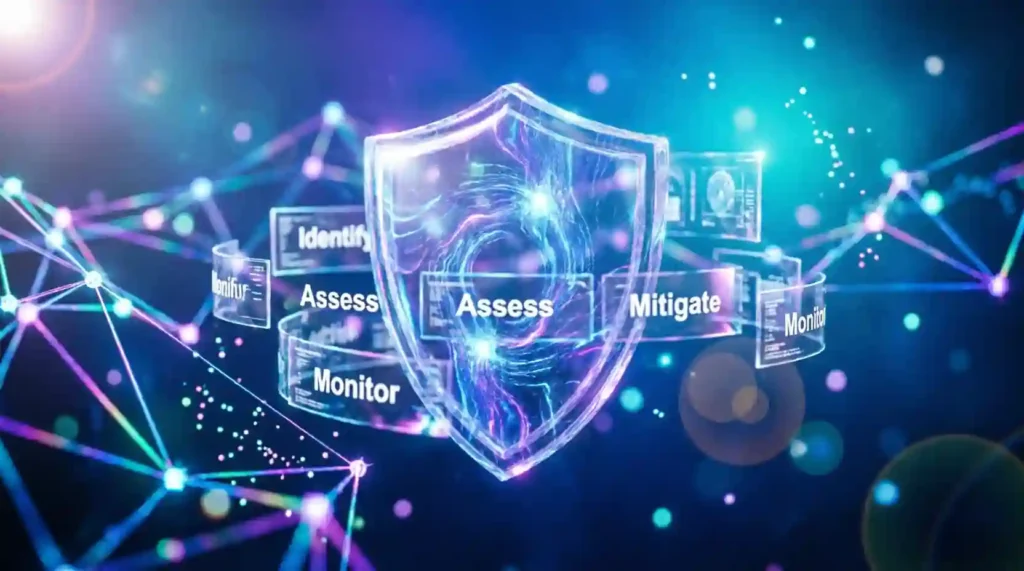
A cybersecurity risk management plan turns an organization’s security goals into clear and actionable steps. It explains which risks need attention, who is responsible for managing them, and which controls should be implemented. Therefore, a well-developed plan helps businesses respond to risks in a consistent and organized way.
Define Your Cyber Risk Appetite
First, determine how much cybersecurity risk the organization is willing to accept. This decision should consider business goals, regulatory requirements, available resources, and the potential impact of a security incident.
For example, a financial organization may have a very low tolerance for risks involving customer or payment information. On the other hand, a small business might accept certain lower-impact risks because of limited resources. As a result, defining risk appetite helps teams make more realistic security decisions.
Identify Critical Assets and Cyber Threats
Next, create an inventory of important business assets. These may include databases, websites, cloud platforms, applications, endpoints, networks, and sensitive information.
At the same time, identify the threats that could affect these assets. Phishing, ransomware, unauthorized access, data breaches, and vulnerable software are common examples. By connecting assets with potential threats, security teams can better understand where protection is most necessary.
Assess and Prioritize Cybersecurity Risks
After identifying risks, evaluate their likelihood and potential impact. A risk that is both highly likely and highly damaging should generally receive greater attention than a low-impact issue.
Furthermore, organizations can use risk ratings to create a clear priority list. This approach prevents teams from spending too much time on minor vulnerabilities while more serious threats remain unresolved.
Select Cyber Risk Responses and Controls
Once risks have been prioritized, decide how each one should be handled. Depending on the circumstances, organizations may reduce a risk through security controls, avoid the activity creating the risk, transfer some responsibility to another party, or formally accept the risk.
For instance, multi-factor authentication can help protect user accounts, while encryption can reduce the consequences of unauthorized data access. In addition, security awareness training, endpoint protection, network monitoring, and reliable backups can strengthen overall protection.
Review and Update Your Cyber Risk Plan
Finally, document the selected risks, controls, responsibilities, timelines, and review procedures. Everyone involved should understand what they are expected to do and when actions need to be completed.
Moreover, the plan should not remain unchanged after it is created. Business operations and cyber threats evolve continuously. Therefore, organizations should review the plan regularly, measure control effectiveness, and update priorities when necessary.
As a result, a well-maintained cybersecurity risk management plan provides a practical roadmap for reducing security exposure and supporting the organization’s broader cyber risk strategy.
Cyber Security Risk Analytics and Risk Assessment
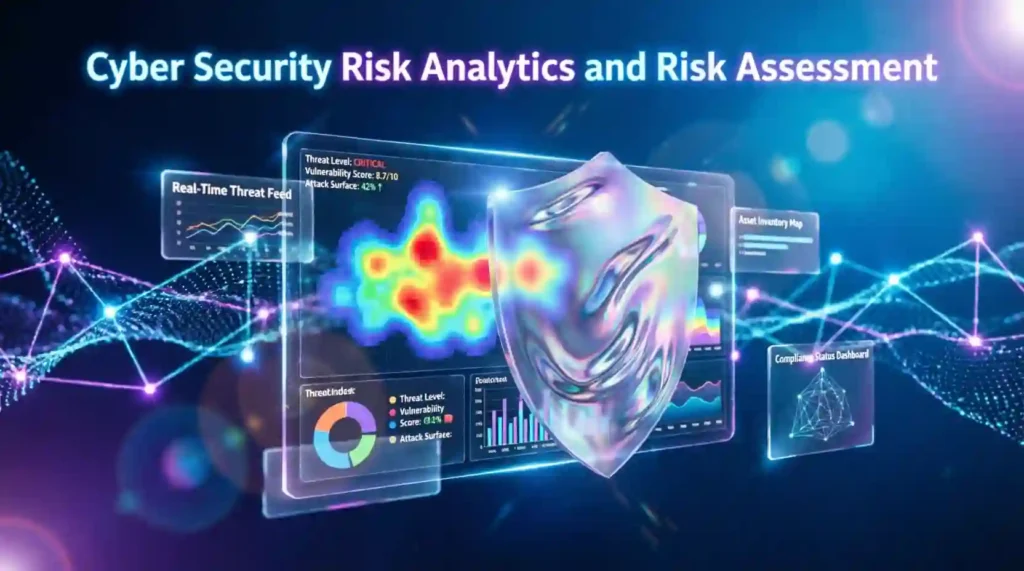
Cyber security risk analytics helps organizations use security data to understand potential threats and make better risk decisions. Instead of relying only on assumptions, security teams can analyze information from systems, networks, applications, users, and previous incidents. As a result, they can identify patterns and determine which risks deserve immediate attention.
Risk assessment is an important part of this process. It helps an organization estimate how likely a threat is to occur and what damage it could cause. Therefore, combining risk assessment with reliable data can make cybersecurity decisions more accurate and practical.
Using Cyber Risk Analytics to Prioritize Risks
Organizations can collect data from several sources, including vulnerability scans, security logs, threat intelligence, endpoint monitoring, access records, and incident reports. By analyzing this information, security teams can identify unusual activity and discover weaknesses before they lead to serious incidents.
For example, if a vulnerability affects a business-critical application and is actively being exploited, it should receive a higher priority than a vulnerability with little practical exposure. Similarly, repeated failed login attempts may indicate an account-based threat that requires further investigation.
Moreover, analytics can help security teams compare risks across different systems. This makes it easier to allocate resources where they can provide the greatest reduction in risk.
Measuring Cyber Risk With KPIs
In addition to identifying risks, organizations should measure how effectively they are managing them. Key performance indicators (KPIs) can provide useful information about security improvements and remaining weaknesses.
For instance, businesses can monitor the number of unresolved critical vulnerabilities, average incident response time, phishing test results, security incidents, and the percentage of employees completing security training. Furthermore, tracking these metrics over time can show whether security controls are producing the expected results.
Consequently, cyber risk analytics should support both technical teams and business leaders. When security data is presented in clear business terms, decision-makers can better understand the organization’s risk exposure and determine where additional investment or action is needed.
Cybersecurity Risk Management Construct: Key Building Blocks

A cybersecurity risk management construct provides the basic structure an organization uses to manage cyber threats consistently. Rather than depending on a single security tool or department, it brings together people, processes, technology, and continuous improvement. Therefore, organizations can create a more coordinated approach to protecting their systems and information.
People and Responsibilities in Cyber Risk Management
People play an important role in managing cybersecurity risks. Security leaders, IT teams, managers, and employees should understand their responsibilities and know how their actions can affect the organization’s security.
For example, security teams may monitor threats and manage technical controls, while employees are expected to follow security policies and report suspicious activity. In addition, senior management should provide appropriate resources and support. As a result, cybersecurity becomes a shared responsibility rather than the responsibility of the IT department alone.
Cyber Risk Management Processes and Policies
Clear processes and policies help organizations manage risks in a consistent way. These may cover access management, data protection, vulnerability management, incident response, employee training, and third-party security.
Furthermore, documented procedures make it easier for employees to know what actions to take when a security issue occurs. Regular reviews are also important because outdated policies may no longer address current threats or business requirements.
Technology and Cyber Risk Security Controls
Technology provides practical protection against many cyber threats. Depending on the organization’s needs, security controls may include multi-factor authentication, encryption, firewalls, endpoint protection, vulnerability scanning, backups, and network monitoring.
However, technology alone cannot eliminate cyber risk. Therefore, organizations should select controls based on their actual risks instead of simply purchasing more security products.
Continuous Improvement in Cyber Risk Management
Finally, an effective risk management structure should improve over time. Organizations should review incidents, assess control performance, monitor emerging threats, and update their policies when necessary.
Moreover, lessons learned from security incidents can help prevent similar problems in the future. By continuously evaluating and improving their approach, businesses can strengthen resilience and keep their cybersecurity efforts aligned with changing risks.
Best Practices for Managing Cybersecurity Risk
An effective cyber risk strategy should be supported by practical security practices that can be applied consistently. Although every organization has different risks, several approaches can help reduce exposure and improve overall security. Therefore, businesses should focus on practices that match their systems, resources, and risk priorities.
Conduct Regular Cyber Risk Assessments
First, organizations should perform cybersecurity risk assessments regularly rather than relying on an assessment completed years ago. New vulnerabilities, technologies, vendors, and threats can change the organization’s risk profile.
In addition, regular assessments help security teams identify weaknesses before attackers can exploit them. Businesses should also reassess critical systems after major changes, such as adopting a new cloud platform or launching an important application.
Improve Cybersecurity Awareness and Hygiene
Employees can play a major role in preventing security incidents. Consequently, organizations should provide regular security awareness training covering phishing, strong passwords, suspicious links, safe browsing, and appropriate data handling.
Moreover, basic cyber hygiene should be supported by technical controls such as multi-factor authentication, access restrictions, automatic updates, and secure backups. Together, these measures can reduce the likelihood and impact of common attacks.
Use Established Cybersecurity Frameworks
Organizations can also benefit from established cybersecurity frameworks. Frameworks provide structured guidance for identifying, protecting, detecting, responding to, and recovering from security risks.
However, businesses should adapt framework recommendations to their specific needs. A smaller organization may require a simpler implementation, while a large enterprise may need more detailed controls and governance. Thus, the goal should be practical risk reduction rather than following a framework mechanically.
Prepare an Incident Response Plan
Even strong security controls cannot guarantee that an incident will never occur. Therefore, organizations should prepare an incident response plan before a serious attack happens.
The plan should define who is responsible for responding, how incidents should be reported, which systems may need to be isolated, and how communication should be handled. Furthermore, organizations should test the plan periodically so employees understand their roles during an actual incident.
Monitor Third-Party and Vendor Risks
Finally, businesses should consider the cybersecurity risks associated with suppliers, contractors, cloud providers, and other third parties. A security weakness at a vendor can potentially affect the organization and its customers.
For this reason, companies should evaluate important vendors before working with them and review their security practices periodically. In addition, contracts can include appropriate security requirements, reporting obligations, and incident notification procedures.
By combining regular assessments, employee training, established frameworks, incident preparation, and vendor oversight, organizations can build a stronger and more resilient approach to cybersecurity risk management.
Frequently Asked Questions About Cyber Risk Strategy
What Is Cyber security Strategy?
A cybersecurity strategy is a long-term approach for protecting an organization’s systems, networks, applications, and data from cyber threats. It defines security priorities, responsibilities, controls, and response procedures. Moreover, an effective strategy aligns cybersecurity activities with business goals and changing risks.
How to Manage Cybersecurity Risk?
To manage cybersecurity risk, organizations should first identify critical assets and potential threats. Next, they should assess the likelihood and impact of those risks and prioritize the most serious ones. After that, appropriate security controls can be implemented. Finally, businesses should continuously monitor their environment and review their controls as threats change.
What Is Cybersecurity Risk Management Strategy?
A cybersecurity risk management strategy is a structured approach to identifying, assessing, prioritizing, and reducing cyber risks. It combines people, processes, policies, and technology to protect important business assets. Therefore, it helps organizations make informed security decisions instead of responding to threats only after an incident occurs.
What Are the Top 5 Cybersecurity Risks?
The five common cybersecurity risks include:
- Phishing and social engineering – Attackers trick users into revealing information or opening malicious content.
- Ransomware – Malicious software can encrypt systems or data and disrupt business operations.
- Stolen or compromised credentials – Weak or exposed passwords can allow unauthorized access.
- Unpatched vulnerabilities – Outdated software may contain security weaknesses that attackers can exploit.
- Third-party and supply chain risks – A security problem at a vendor or service provider can affect the organization.
However, the most serious risks vary depending on an organization’s industry, technology, data, and threat environment.
How Often Should Cybersecurity Risks Be Assessed?
Cybersecurity risks should be assessed regularly and whenever significant changes occur. For example, organizations should consider reassessing risks after major technology upgrades, new business partnerships, serious security incidents, or changes in regulations.
In addition, continuous monitoring can identify emerging threats between formal assessments. As a result, businesses can update their security priorities before risks become more difficult or expensive to manage.
Conclusion
A strong cyber risk strategy helps organizations move from reactive security to proactive risk management. By identifying critical assets, assessing potential threats, prioritizing risks, and applying appropriate security controls, businesses can reduce their exposure to cyberattacks.
Moreover, effective cybersecurity requires continuous effort. Regular risk assessments, employee training, security monitoring, incident response planning, and vendor oversight can strengthen an organization’s overall resilience. In addition, using security data and risk analytics allows teams to make more informed decisions about where resources are needed most.
Ultimately, cybersecurity risk management is not a one-time project. As threats and business environments continue to change, organizations should regularly review and improve their strategies. Therefore, a practical and continuously updated approach can help protect valuable information, maintain business operations, and build long-term security.