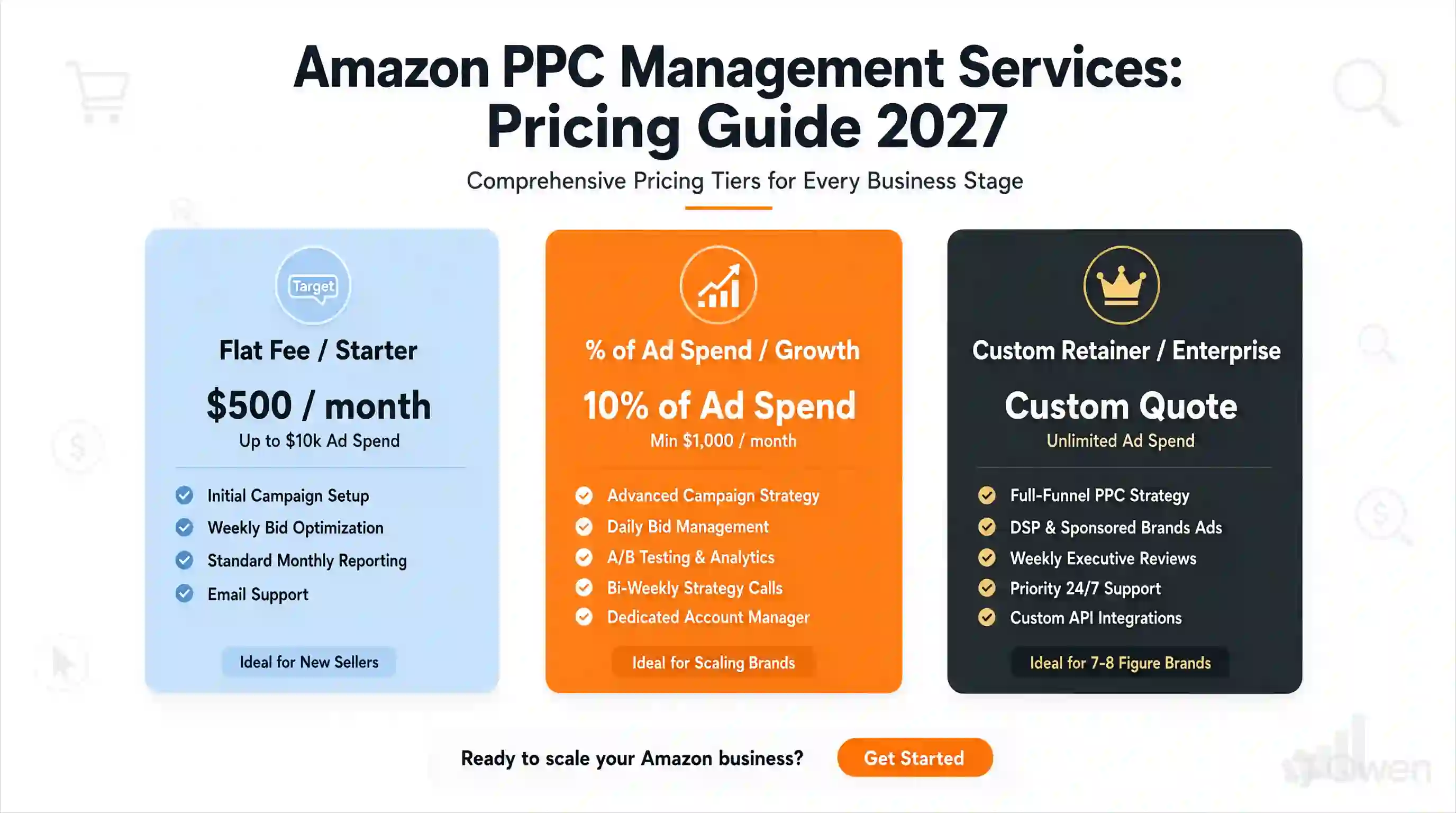
Amazon PPC Management Services: Pricing Guide 2027
Amazon advertising can grow a brand fast, or drain a budget just as fast. Most sellers find out which one it is only after a few expensive months. That is why many brands hand their campaigns to Amazon PPC management services: specialists who plan, run and optimize ads so that every dollar of ad spend has a job to do.
But the market is crowded, pricing is rarely transparent, and the sales calls all sound the same. This guide explains what these services actually include, how they charge, what you should expect to pay at different ad spend levels, and how to choose the right provider without getting locked into a bad contract.
What Are Amazon PPC Management Services?
Amazon PPC (pay-per-click) is Amazon’s auction-based advertising system. You bid on keywords or product placements, and you pay only when a shopper clicks your ad. Those ads appear in search results, on product detail pages and across Amazon’s wider network.
Amazon PPC management services are the professional services that handle this work for you. A provider takes over your Amazon advertising PPC management: building campaigns, choosing keywords, setting bids, controlling budgets, and reporting on results. In other words, it is pay per click management for Amazon, done by people who work in the platform every day.
These services are offered by several types of providers:
- Specialist Amazon PPC agencies that focus only on advertising
- Full-service Amazon agencies that also handle listings, catalog, brand strategy and logistics
- Freelance PPC managers who work with a small number of sellers
- Software-assisted services that combine automation tools with human oversight
The goal is the same in every case: more profitable sales from the same or a smaller ad budget.
What Do Amazon PPC Management Services Include?
Scope varies by provider, so never assume. A good service covers the full advertising cycle, not just bid changes.
Core Services You Should Expect
- Account audit and goal setting. Review of your current campaigns, wasted spend, and targets for profit, rank or growth.
- Keyword and product targeting research. Finding the search terms and competitor products worth bidding on.
- Campaign structure and setup. Separating campaigns by match type, product group or goal so you can control spend.
- Bid and budget management. Daily or weekly adjustments based on performance, not guesswork.
- Negative keyword management. Removing search terms that spend money without converting.
- Ad creative support. Sponsored Brands headlines, custom images and video where relevant.
- Reporting. Regular reports that explain what changed, why, and what happens next.
Ad Types Covered
Make sure the provider manages every format that fits your business:
- Sponsored Products: keyword and product-targeted ads for individual listings. Usually the foundation of any account.
- Sponsored Brands: banner and video ads that promote your brand and several products at once.
- Sponsored Display: ads that reach shoppers on and off Amazon, including retargeting.
- Amazon DSP: programmatic advertising for larger budgets and upper-funnel reach.
Some providers only manage Sponsored Products. That is fine if you know it in advance, but it should not be a surprise.
Key Metrics: ACOS, TACoS and ROAS
Any provider you hire should be fluent in these numbers and explain them in plain language.
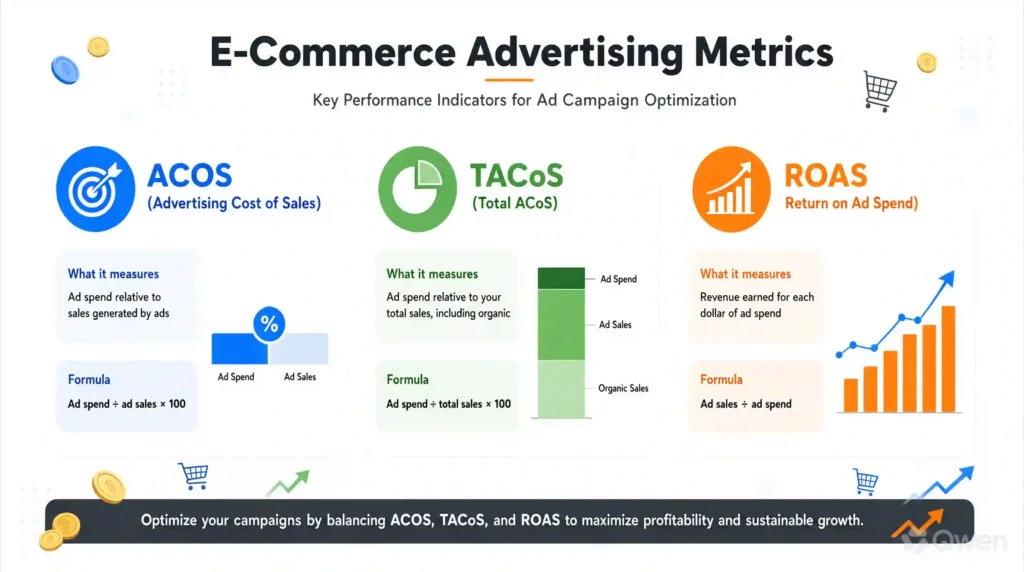
ACOS alone can mislead. A launch campaign may run at a high ACOS on purpose to build rank and reviews. TACoS shows whether advertising is helping your total business, because healthy ads should lift organic sales over time. A provider who talks only about ACOS may be optimizing for a number instead of your profit.
Amazon PPC Management Pricing Models
Agencies and freelancers generally use one of three pricing structures. Each has trade-offs.
Percentage of Ad Spend
The provider charges a percentage of your monthly advertising budget. Rates commonly fall somewhere in the range of 10% to 20%, and often decrease as spend grows. Many providers also set a monthly minimum fee.
- Pros: Simple, scales with your account, and the provider is invested in managing larger budgets well.
- Cons: The provider earns more when you spend more, which can create a conflict of interest if no one is watching efficiency.
Flat Monthly Fee
You pay a fixed monthly amount for a defined scope, regardless of how much you spend on ads.
- Pros: Predictable costs, and no incentive to push spend higher.
- Cons: Can be expensive for small budgets, and scope creep is common if the contract is vague.
Hybrid and Performance-Based Pricing
Hybrid models combine a base fee with a percentage or a bonus tied to results such as revenue growth, lower ACOS or profit targets.
- Pros: Aligns incentives when the targets are clear.
- Cons: Only works if both sides agree on how results are measured, and the baseline is fair.
Affordable Amazon PPC Management Services
If your budget is limited, you do not have to skip professional help. Affordable Amazon PPC management services usually take one of these forms:
- Freelance managers, who often charge less than agencies because of lower overhead
- Software-led services, where automation handles routine bid changes and a human reviews strategy
- Audit-only or consulting packages, where an expert sets up the structure and you run it day to day
- Smaller agencies with lower minimums and fewer accounts per manager
Whatever you choose, check what is left out at the lower price. Cheap management that ignores negative keywords and reporting often costs more in wasted ad spend than it saves in fees.
How Much Does Amazon PPC Management Cost?
The honest answer is that it depends on your ad spend, the scope of work and the provider. The table below shows how costs typically scale. Treat the ranges as general ballparks, and always compare them against real quotes.
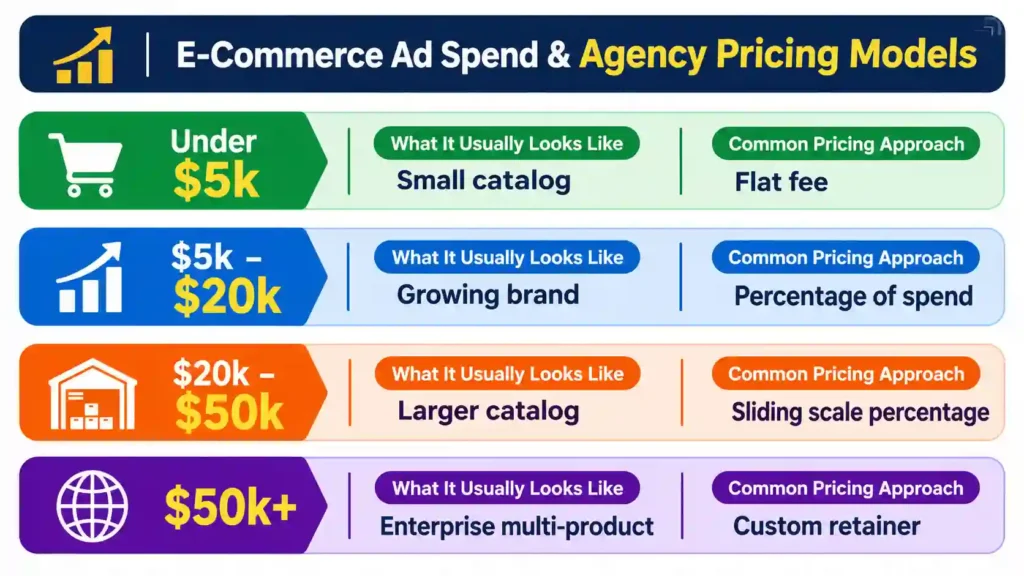
A useful rule of thumb: a management fee only makes sense when the improvement it creates is larger than the fee. If you spend $3,000 per month and an agency charges $1,500, the fee is half your ad budget. At that stage, a freelancer, software or a one-time audit is usually the smarter move.
Costs That Do Not Show Up on the Quote
The monthly fee is rarely the full price. Ask about:
- Onboarding or setup fees for the audit and account restructure
- Software or tool charges passed through to you
- Creative costs for Sponsored Brands videos or custom images
- Extra fees for additional marketplaces or ad types such as DSP
- Minimum contract length, which can lock in months of fees even if results are poor
How to Tell if a Fee Is Worth It
Compare the fee to the value delivered. Ask what improvement is realistic in the first three to six months, such as lower wasted spend, better TACoS or growth in organic rank. If the provider cannot explain how they will create that improvement, the fee is a guess.
How to Choose an Amazon PPC Management Service
Once you know what you need and what you can afford, use these criteria to compare providers.
Amazon PPC Management Agency vs Company
You will see the terms Amazon PPC management agency and Amazon PPC management company used interchangeably, and in practice they mean the same thing. What matters is the type of provider:
- PPC-only specialists go deep on advertising. They are a good fit if your listings and brand are already strong.
- Full-service partners handle ads plus listing optimization, brand strategy and more. They suit brands that need broader help, but the ad work may be less specialized.
- Freelancers give you direct access to one expert but less backup if they are unavailable.
Ask who will actually manage your account day to day. A senior strategist in the sales call and a junior on your account is a common pattern.
Amazon PPC Management Software vs Tools
Software is the main alternative to hiring a human provider, and many agencies use it behind the scenes. Amazon PPC management software and tools automate bidding, keyword harvesting, reporting and rules-based changes.
- Choose software if you have the time and knowledge to set strategy yourself and mainly need automation and dashboards.
- Choose a service if you lack the time or expertise, or if your account needs strategic decisions rather than just faster bid changes.
- Use both if your agency’s tools are included in its fee, or if you want a tool for visibility while a manager handles strategy. Make sure you are not paying for duplicate software.
Questions to Ask on the Sales Call
- Who will manage my account, and how many accounts do they handle?
- Which ad types will you manage, and which are extra?
- How do you measure success: ACOS, TACoS, ROAS, profit or rank?
- How often will you report, and can I see a sample report?
- What will happen in the first 30, 60 and 90 days?
- Do you have experience in my category and at my ad spend level?
- What are all fees, including setup, software and creative?
Contract Terms to Check
- Minimum commitment. Short terms or month-to-month agreements reduce your risk.
- Account ownership. You should own your advertising account and data at all times.
- Access and transparency. You should be able to see what is being done in your own account.
- Exit terms. Know the notice period and whether campaign data and structure stay with you.
What to Expect in the First 90 Days
A professional onboarding usually follows a clear pattern:
- Days 1 to 30: Audit, goal setting, restructuring, and cleaning up wasted spend
- Days 31 to 60: Testing keywords, targets and ad types while collecting data
- Days 61 to 90: Scaling what works, cutting what does not, and reviewing results against the goals set at the start
Good providers explain early changes, because results from a restructure do not appear overnight.
Red Flags to Avoid
- Guaranteed results or promises of a specific ACOS before looking at your account
- Refusal to give you full access to your ad account or data
- Long lock-in contracts with no performance review
- Vague reports that show activity but not outcomes
- Pricing that is unclear or changes after the call
- One-size-fits-all strategies that ignore your margins and goals
Amazon PPC Management Services FAQs
What is Amazon PPC?
Amazon PPC is Amazon’s pay-per-click advertising system. Sellers bid on keywords or product placements and pay only when a shopper clicks their ad. Ads appear in search results and on product pages, which helps products gain visibility, sales and organic ranking.
What does an Amazon PPC manager do?
An Amazon PPC manager plans and runs your advertising. This includes keyword research, campaign setup, bid and budget changes, negative keyword management, testing, and regular reporting on ACOS, TACoS and ROAS. Their job is to improve profitable sales while controlling wasted spend.
How much do Amazon PPC management services cost?
Costs depend on your ad spend and the provider. Agencies often charge a percentage of ad spend, commonly in the range of 10% to 20%, or a flat monthly fee, and many add a monthly minimum. Smaller budgets may be better served by freelancers or software. Always ask about setup, software and creative fees.
Is an Amazon PPC management agency worth it?
It can be, when the improvement it creates is larger than its fee. Agencies tend to be worth it for sellers with meaningful ad spend, limited time or limited PPC expertise. If your budget is small, a freelancer, software or a one-time audit may give a better return.
How long does it take to see results from Amazon PPC management?
You may see wasted spend drop within the first few weeks, but meaningful improvements in ACOS, TACoS and organic rank usually take two to three months or longer, depending on your category, competition and budget.
Should I use an agency or Amazon PPC management software?
Choose an agency or manager if you need strategy and hands-on optimization. Choose software if you have the expertise and mainly need automation and reporting. Many sellers combine both, using software for visibility and a manager for decisions.
Final Thoughts
The best Amazon PPC management services are not the cheapest or the biggest. They are the ones whose scope, pricing and reporting fit your budget, your goals and your stage of growth. Decide what you need, understand how providers charge, ask the right questions, and read the contract before you sign. Do that, and your ad spend will start working for your business instead of against it.
