If you own a small business, finding affordable ways to attract new customers and keep existing ones can be challenging. While social media and paid advertising are useful, email marketing remains one of the most effective digital marketing strategies for building lasting customer relationships and increasing sales. Whether you’re just starting or looking to improve your current strategy, this guide will show you how email marketing for small business works, why it matters, and how to create campaigns that deliver real results.
What Is Email Marketing for Small Business?
Email marketing is the process of sending emails to current and potential customers to promote products or services, share valuable information, build trust, and encourage repeat purchases. Unlike social media, where algorithms control who sees your content, email gives you direct access to your audience’s inbox. This makes it one of the most reliable marketing channels for businesses of all sizes.
A successful email marketing strategy can help you:
- Build long-term customer relationships
- Promote products and services
- Increase website traffic
- Generate qualified leads
- Boost online and offline sales
- Keep customers informed about new offers
Even if you have a small budget, email marketing allows you to compete with larger brands by reaching the right audience at the right time.
Why Is Email Marketing Important for Small Businesses?
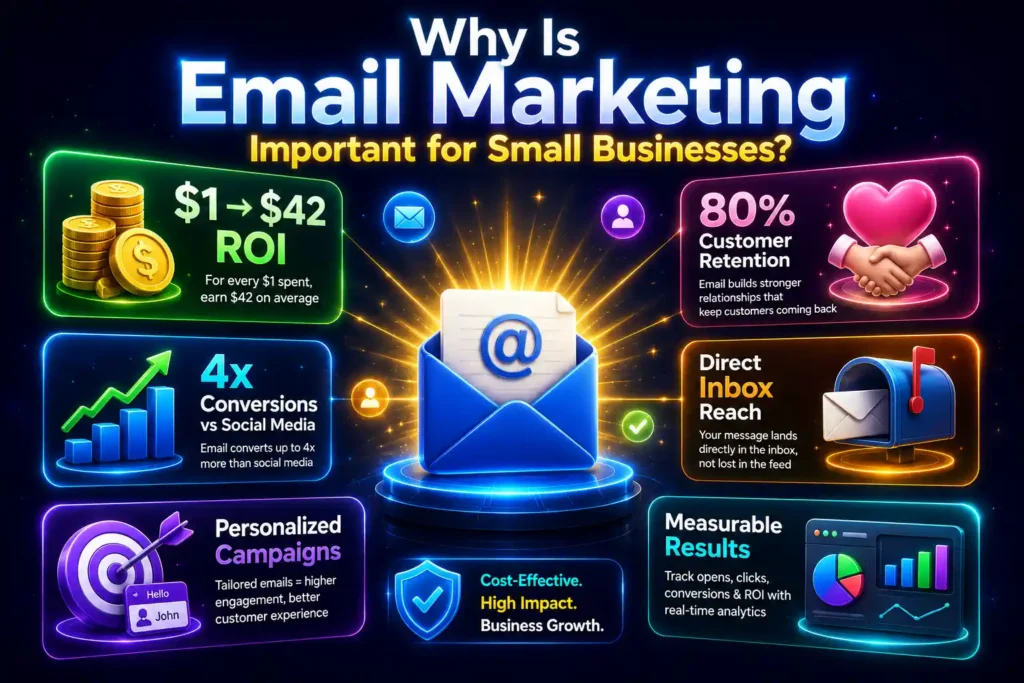
Many small business owners focus heavily on social media or paid advertising, but email marketing offers benefits that these channels cannot always provide.
Delivers an Excellent Return on Investment
Email marketing is one of the most cost-effective digital marketing channels. Instead of spending large amounts on advertising, you can reach hundreds or even thousands of subscribers with a single campaign.
This makes it ideal for startups, local businesses, online stores, consultants, freelancers, and service providers.
You Own Your Audience
Social media platforms constantly change their algorithms, reducing your organic reach.
Your email list belongs to you. As long as subscribers choose to stay, you can communicate with them whenever you have valuable information to share.
Builds Trust and Credibility
People rarely buy from a business they don’t trust.
By consistently sending useful tips, updates, and personalized offers, you stay connected with your audience and build stronger relationships over time.
When customers trust your brand, they are more likely to purchase from you again and recommend your business to others.
Helps Increase Sales
Email marketing isn’t only about sending promotions.
A well-planned campaign can guide potential customers through every stage of the buying journey—from discovering your business to becoming loyal customers.
For example, you can:
- Welcome new subscribers
- Share educational content
- Introduce products
- Offer limited-time discounts
- Follow up after purchases
- Encourage repeat orders
Each email moves customers one step closer to making a purchase.
Benefits of Email Marketing for Small Business
Email marketing provides several advantages that help small businesses grow without requiring a huge marketing budget.
Cost-Effective Marketing
Compared to traditional advertising, email marketing costs much less while reaching a highly targeted audience.
Many email marketing platforms even offer free plans, making it easy for beginners to get started.
Better Customer Engagement
Regular emails keep your audience engaged with your business.
Whether you’re sharing industry tips, company news, or exclusive discounts, consistent communication helps customers remember your brand.
Higher Conversion Rates
Since subscribers have already shown interest in your business, they are more likely to click your emails and complete desired actions.
These actions may include:
- Purchasing a product
- Booking a service
- Downloading a guide
- Registering for an event
- Contacting your business
Personalized Customer Experience
Modern email marketing tools allow you to personalize messages using customer data.
Simple personalization includes:
- Using the subscriber’s first name
- Recommending products based on previous purchases
- Sending location-based offers
- Celebrating birthdays or anniversaries
Personalized emails often receive better engagement than generic campaigns.
Stronger Customer Retention
Acquiring new customers is important, but keeping existing customers is often more profitable.
Email marketing helps maintain long-term relationships by sending valuable content after every purchase.
Customers who regularly hear from your business are more likely to return.
How to Build an Email List
A quality email list is the foundation of every successful email marketing campaign.
Instead of buying email lists, focus on attracting people who genuinely want to hear from your business.
Create a Valuable Lead Magnet
People are more likely to share their email address when they receive something valuable in return.
Popular lead magnets include:
- Free eBooks
- Checklists
- Templates
- Discount coupons
- Free consultations
- Webinars
- Product samples
Choose a lead magnet that solves a specific problem for your target audience.
Add Signup Forms to Your Website
Your website should make it easy for visitors to subscribe.
Place signup forms on:
- Homepage
- Blog posts
- Contact page
- Footer
- Landing pages
- Checkout page
Keep your forms short by asking only for essential information like name and email address.
Use Landing Pages
Dedicated landing pages often convert better because they focus on a single goal.
Clearly explain:
- What subscribers will receive
- Why it’s valuable
- How often you’ll send emails
A strong call-to-action encourages more visitors to join your list.
Promote Your Email List on Social Media
Your social media followers are already interested in your business.
Encourage them to subscribe by promoting exclusive content, early access to offers, or subscriber-only discounts.
This helps convert followers into long-term email subscribers.
Collect Emails from Existing Customers
If someone has already purchased from your business, they may be interested in hearing from you again.
Ask customers if they’d like to receive:
- Product updates
- Special offers
- Helpful tips
- Exclusive promotions
- Company news
Always get permission before adding someone to your mailing list.
How to Choose the Right Email Marketing Platform
The right email marketing platform makes creating, sending, and tracking campaigns much easier.
Instead of choosing the most expensive option, focus on features that match your business needs.
Look for Easy-to-Use Features
A beginner-friendly platform should allow you to:
- Create professional emails without coding
- Schedule campaigns in advance
- Manage subscriber lists
- Track campaign performance
- Automate routine emails
An intuitive dashboard saves time and reduces the learning curve.
Check Automation Capabilities
Automation helps you send emails automatically based on customer actions.
Examples include:
- Welcome emails after signup
- Order confirmations
- Birthday greetings
- Abandoned cart reminders
- Follow-up emails after purchases
Automation improves consistency while saving valuable time.
Consider Pricing and Scalability
Choose a platform that fits your current budget but can also grow with your business.
Many providers offer free plans for small subscriber lists, making them a great option for startups.
Make Sure It Offers Analytics
Good analytics help you understand what’s working and what needs improvement.
Useful reports include:
- Open rates
- Click-through rates
- Conversion rates
- Bounce rates
- Unsubscribe rates
Tracking these metrics allows you to improve future campaigns based on real data.
Types of Email Campaigns Every Small Business Should Send
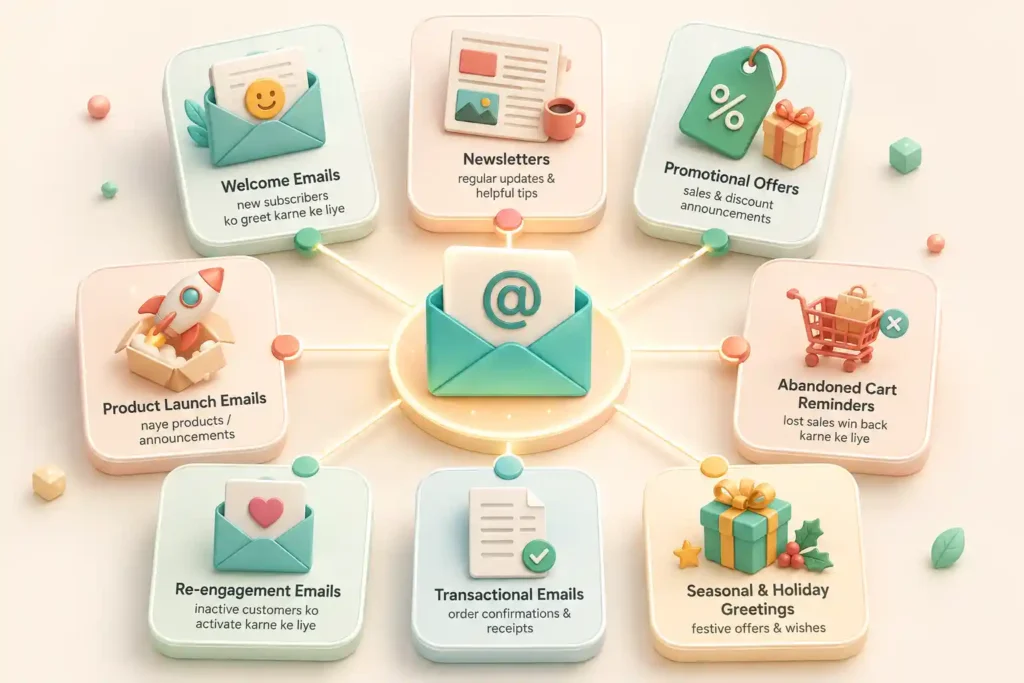
Sending the same type of email repeatedly can reduce engagement. A successful email marketing for small business strategy includes different types of campaigns that serve specific purposes throughout the customer journey.
Welcome Emails
A welcome email is the first message subscribers receive after joining your email list. It creates a positive first impression and introduces your business.
A good welcome email should:
- Thank subscribers for joining.
- Introduce your brand.
- Explain what they can expect.
- Offer a discount or free resource.
- Encourage them to visit your website.
Newsletter Emails
Newsletters help you stay connected with your audience by sharing valuable information instead of constantly promoting products.
You can include:
- Industry news
- Helpful tips
- Blog posts
- Company updates
- Customer success stories
Promotional Emails
Promotional emails are designed to increase sales by highlighting products, services, or special offers.
Keep these emails clear, visually appealing, and focused on one main call-to-action.
Abandoned Cart Emails
For eCommerce businesses, abandoned cart emails remind customers to complete their purchases. A simple reminder, combined with a limited-time discount, can recover lost sales.
Re-engagement Emails
Some subscribers stop opening emails over time. Re-engagement campaigns encourage inactive subscribers to reconnect with your brand through exclusive offers or fresh content.
Thank You and Feedback Emails
Thank-you emails show appreciation after a purchase, while feedback emails help you understand customer experiences and improve your products or services.
How to Create an Effective Email Marketing Campaign
A successful campaign is more than sending promotional messages. Every email should provide value and encourage readers to take action.
Write an Attention-Grabbing Subject Line
Your subject line determines whether people open your email.
Keep it:
- Short
- Clear
- Interesting
- Relevant
Avoid misleading or overly promotional language.
Personalize Your Emails
Personalization makes emails feel more relevant.
Examples include:
- Using the subscriber’s name.
- Recommending products based on previous purchases.
- Sending personalized offers.
- Segmenting customers by interests.
Keep Your Content Simple
Most people quickly scan emails instead of reading every word.
Use:
- Short paragraphs
- Bullet points
- Simple language
- Clear headings
Include One Strong Call-to-Action
Every email should guide readers toward one specific action, such as:
- Shop Now
- Download the Guide
- Book a Consultation
- Read the Blog
- Contact Us
Too many CTAs can confuse readers.
Optimize for Mobile Devices
Many users read emails on smartphones. Make sure your emails:
- Load quickly.
- Use readable fonts.
- Include responsive layouts.
- Have clickable buttons.
Email Marketing Best Practices
Following best practices can improve engagement and deliver better results.
- Send emails consistently.
- Segment your audience based on interests.
- Test different subject lines.
- Use high-quality visuals when necessary.
- Avoid sending too many emails.
- Keep your email list updated.
- Always provide an unsubscribe option.
- Focus on delivering value before selling.
Common Email Marketing Mistakes to Avoid
Even experienced marketers make mistakes. Avoid these common issues:
- Buying email lists.
- Ignoring personalization.
- Sending emails too frequently.
- Writing long, confusing emails.
- Forgetting mobile optimization.
- Using weak subject lines.
- Not tracking campaign performance.
- Failing to test emails before sending.
Avoiding these mistakes helps improve engagement and protects your sender reputation.
Email Marketing for Small Business Metrics You Should Track
Measuring performance helps you understand what’s working and where improvements are needed.
Open Rate
Shows how many subscribers opened your email. A strong subject line usually increases open rates.
Click-Through Rate (CTR)
Measures how many readers clicked a link in your email. A higher CTR often indicates relevant content and effective calls-to-action.
Conversion Rate
Tracks how many subscribers completed your desired action, such as making a purchase or filling out a form.
Bounce Rate
Shows the percentage of emails that couldn’t be delivered. Regularly removing invalid email addresses helps reduce bounce rates.
Unsubscribe Rate
A high unsubscribe rate may indicate that your content isn’t meeting subscriber expectations or that you’re sending emails too often.
Email Marketing Trends in 2027
Email marketing continues to evolve, and small businesses should stay updated with the latest trends.
Some of the biggest trends include:
- AI-powered email personalization.
- Advanced automation workflows.
- Interactive emails with clickable elements.
- Better audience segmentation.
- Privacy-focused email marketing.
- Data-driven campaign optimization.
Adopting these trends can help improve engagement and keep your business competitive.
Conclusion
Email marketing remains one of the most effective ways for small businesses to connect with customers, build trust, and increase sales. By creating a quality email list, sending valuable content, and tracking your campaign performance, you can turn subscribers into loyal customers.
Start with simple campaigns, stay consistent, and continuously improve based on data. email marketing can become one of most valuable assets in your overall digital marketing strategy.
FAQs
How do I start email marketing as a beginner?
Start by choosing an email marketing platform, building an email list with permission, creating a welcome email, and sending valuable content consistently.
Can you make money with email marketing?
Yes. Businesses make money through email marketing by promoting products or services, nurturing leads, recovering abandoned carts, and encouraging repeat purchases.
How can I learn email marketing for small business?
You can learn email marketing through online courses, blogs, YouTube tutorials, and hands-on practice using beginner-friendly email marketing platforms.
What are the 5 steps of email marketing?
The five basic steps are building an email list, choosing an email marketing platform, creating valuable content, sending campaigns, and analyzing results to improve future emails.
What are the best email marketing tools for small businesses?
Some popular email marketing tools for small businesses include Mailchimp, Brevo, Kit, Active Campaign, and Mailer Lite. The best choice depends on your budget, business size, and marketing goals.
2 Comments