What Is Social Media Reputation Management?
Social media reputation management is the process of monitoring, managing, and improving how people view a business across social media platforms. It includes tracking brand mentions, responding to customer feedback, addressing complaints, and sharing useful content that builds trust.
Every comment, review, post, and customer interaction can affect a brand’s online image. A business that responds professionally and stays active can build stronger relationships with its audience. On the other hand, ignored complaints or inconsistent communication can damage trust.
How Reputation Management Works
Reputation management starts with monitoring what people say about a brand. Businesses can track mentions, comments, reviews, and conversations across different platforms. This helps them identify positive feedback and potential problems.
Businesses should then respond to customers in a timely and helpful way. A thoughtful response can resolve a complaint, answer a question, or show appreciation for positive feedback.
Finally, businesses can use customer feedback to improve their products, services, and communication. They can also publish helpful content and encourage satisfied customers to share genuine experiences.
How Social Media Reputation Affects Your Brand
Your social media reputation can influence how potential customers perceive your business before they make a purchase. Positive interactions can strengthen trust, while repeated complaints or unanswered questions can create doubts.
A strong reputation also helps businesses maintain better relationships with existing customers. When people see that a brand listens, responds, and takes feedback seriously, they have more reasons to engage with it.
Social Media Reputation vs. Online Reputation
Social media reputation focuses mainly on how people perceive a business on platforms such as Facebook, Instagram, LinkedIn, TikTok, and X. Online reputation covers a wider range of digital channels, including search results, review websites, blogs, forums, and social media.
Businesses should manage both areas because customers often research a brand across multiple online sources before making a decision.
Why Social Media Reputation Management Matters for Businesses

A strong online reputation can influence how customers discover, evaluate, and interact with a business. People often check social media profiles, reviews, comments, and other online information before they choose a product or service.
Businesses that manage their reputation consistently can build trust and create better customer relationships. They can also identify problems early and respond before negative conversations grow.
Build Trust With Your Audience
Trust plays an important role in customer decisions. When people see helpful content, genuine customer interactions, and professional responses, they can develop a more positive view of a brand.
Businesses can strengthen this trust by answering questions clearly, acknowledging customer concerns, and sharing useful information. Consistent communication also helps customers understand what the brand stands for.
Influence Customer Purchase Decisions
Customers often compare different businesses before making a purchase. They may look at reviews, social media comments, customer complaints, and the way a company responds to feedback.
Positive experiences can encourage customers to move forward with a purchase. However, repeated unanswered complaints can create doubts. This makes reputation management an important part of the customer journey.
Turn Negative Feedback Into Opportunities
Negative feedback does not always harm a business. A professional response can show customers that the company listens and takes problems seriously.
Instead of deleting criticism or ignoring complaints, businesses should understand the issue and provide a useful response. When appropriate, they can take the conversation to a private channel to discuss sensitive details while keeping the public response clear.
Businesses can also use recurring complaints to identify areas that need improvement. This approach turns customer feedback into practical insights.
The Importance of Online Reputation Management
The importance of online reputation management goes beyond social media activity. Customers can find information about a business through search engines, review platforms, websites, forums, and social networks.
A consistent reputation across these channels helps businesses present a clear and trustworthy image. Regular monitoring also helps teams discover misleading information, negative trends, or customer concerns that need attention.
Why Reputation Management Is Important for Small Businesses
Why reputation management is important becomes especially clear for small businesses because every customer interaction can have a noticeable impact. A few negative reviews or unresolved complaints can influence how potential customers view a smaller brand.
Small businesses can focus on simple actions such as monitoring mentions, responding to reviews, answering social media questions, and encouraging satisfied customers to share honest feedback.
These steps can help a small business maintain customer trust while creating a stronger foundation for long-term growth.
How to Protect Your Online Reputation

Protecting your online reputation requires regular monitoring and consistent communication. Businesses cannot control every comment or opinion, but they can control how they present their brand and respond to customer concerns.
A proactive approach can help you identify potential reputation problems before they become larger issues. It also gives you more opportunities to build positive experiences with your audience.
Search Engine Reputation Management Tips
Search engines can shape the first impression people get when they search for your business. That makes search engine reputation management tips useful for maintaining a positive online presence.
Start by searching your brand name regularly and reviewing the results on the first few pages. Check for outdated information, inaccurate claims, negative reviews, or websites that mention your business.
You can also publish useful and trustworthy content on your website and social media profiles. Helpful articles, company updates, customer resources, and genuine success stories can give people more reliable information about your brand.
Keep Your Business Information Accurate
Make sure your business name, website, contact details, services, and other important information remain accurate across your social media profiles and online listings.
Incorrect information can confuse customers and create unnecessary complaints. Review important profiles regularly, especially after changing your business details.
Encourage Genuine Customer Feedback
Positive customer experiences can strengthen your reputation. Encourage satisfied customers to share honest feedback on relevant platforms.
Do not create fake reviews or ask customers to post misleading comments. Genuine feedback provides more useful information and helps potential customers make informed decisions.
Respond to Negative Comments Professionally
Negative comments can appear even when a business provides good products or services. Instead of reacting emotionally, review the complaint and determine what happened.
If the customer has a legitimate concern, acknowledge it and offer a practical solution. If someone shares incorrect information, provide accurate facts without becoming argumentative.
For sensitive situations, you can move the detailed conversation to a private channel while keeping your public response brief and professional.
Protect Your Social Media Accounts
Account security also plays a role in reputation protection. Unauthorized access can lead to unwanted posts, messages, or changes to your business profile.
Use strong passwords, enable available security features such as two-factor authentication, and limit account access to trusted team members. Review connected apps and account permissions regularly.
Monitor Your Reputation Consistently
Reputation protection works best as an ongoing process rather than a one-time task. Continue monitoring mentions, reviews, comments, and search results so you can identify new issues quickly.
Regular monitoring also helps you discover positive conversations. You can use these opportunities to thank customers, understand what they value, and strengthen relationships with your audience.
Social Media Marketing for Reputation Management
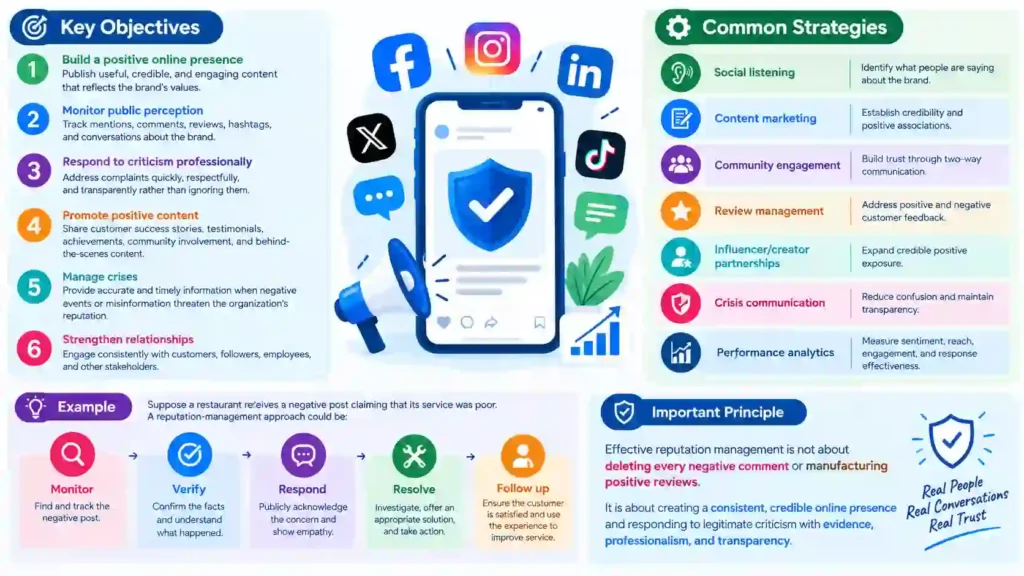
Social media marketing can do more than promote products and services. Businesses can also use it to build trust, communicate with customers, share useful information, and strengthen their public image.
Social media marketing for reputation management focuses on creating positive interactions while staying aware of what customers say about the brand. A consistent social media presence gives businesses more opportunities to show their values and communicate directly with their audience.
Share Helpful and Relevant Content
Useful content can shape how people perceive a brand. Instead of focusing only on promotions, share content that answers customer questions, solves common problems, and provides practical information.
Educational posts, short videos, customer tips, product guides, and industry insights can help demonstrate knowledge and build credibility.
Show Your Brand’s Human Side
People often connect more easily with brands that communicate in a genuine and approachable way. Show the people behind your business, share company updates, and respond naturally to customer conversations.
Avoid overly scripted responses when customers ask questions or share feedback. A human approach can make social interactions feel more personal.
Engage With Your Audience
Regular engagement can help businesses develop stronger relationships with their followers. Reply to relevant comments, answer questions, thank customers for positive feedback, and participate in useful conversations.
You can also ask your audience for opinions about products, services, or content. This gives customers a chance to share their experiences while providing your business with useful insights.
Use Positive Customer Experiences
Genuine customer experiences can support your reputation. With permission, you can highlight customer stories, testimonials, case studies, or user-generated content.
Make sure the content accurately represents the customer’s experience. Authentic examples can provide potential customers with useful information without making exaggerated claims.
Maintain a Consistent Brand Voice
Your brand should communicate with a consistent tone across social media platforms. Decide how your business wants to sound when it answers questions, handles complaints, or shares educational content.
Consistency can make your brand easier to recognize and can reduce confusion when different team members manage social media accounts.
Combine Marketing With Reputation Monitoring
Marketing and reputation management work better together when businesses monitor audience reactions to their content. Track comments, mentions, engagement, reviews, and recurring customer concerns.
If a campaign receives unexpected negative feedback, review the issue before continuing with the same approach. If customers respond positively to a particular type of content, use those insights to improve future campaigns.
This approach helps businesses use social media not only to attract attention but also to build lasting trust with their audience.
Social Media Reputation Management Tools
Managing multiple social media conversations manually can take a lot of time, especially when a business receives frequent mentions, comments, reviews, and messages. Social media reputation management tools can help businesses monitor these activities from a more organized workflow.
The right tool depends on the size of the business, the number of social platforms it manages, and the type of reputation data it needs to track.
Social Media Reputation Management Software
Social media reputation management software can bring monitoring, engagement, analytics, and reporting features into one platform. Some tools can track brand mentions, keywords, customer conversations, and sentiment across different online channels.
Businesses can use these tools to identify important conversations without checking every platform separately.
Social Media Monitoring Tools
Monitoring tools help businesses track mentions of their brand, products, services, or specific keywords. They can also help teams identify sudden increases in conversations around a particular topic.
For example, a business may notice a sudden rise in negative comments after a product issue. Early detection gives the team more time to investigate the problem and communicate with customers.
Review and Feedback Management Tools
Reviews can strongly influence how potential customers perceive a business. Some reputation tools help businesses monitor reviews from multiple platforms and organize customer feedback.
Teams can use this information to identify recurring complaints, respond to customers, and find areas where their products or services need improvement.
Analytics and Reporting Features
Good reputation management requires more than collecting mentions. Businesses also need to understand trends over time.
Analytics features can help track:
- Brand mentions
- Positive and negative conversations
- Customer sentiment
- Response time
- Engagement
- Review trends
- Audience feedback
These metrics can help businesses evaluate whether their reputation strategy supports their broader marketing and customer service goals.
Choose Tools Based on Your Business Needs
A small business may only need basic monitoring and review management, while a larger company may need advanced analytics, team collaboration, automated alerts, and multi-platform monitoring.
Before choosing a tool, consider the social networks it supports, monitoring features, reporting options, pricing, ease of use, and the number of users who need access.
The goal should not be to collect the most data. Instead, choose a tool that helps your team understand important conversations and take useful action.
Frequently Asked Questions About Social Media Reputation Management
Businesses often have questions about managing their reputation across social media and other online channels. These answers explain the basic principles and practical steps businesses can follow.
Why Is Reputation Management Important?
Why reputation management is important depends on how customers discover and evaluate a business. People often check social media profiles, reviews, search results, and customer comments before they choose a company.
A strong reputation can build trust and support customer relationships. Regular monitoring also helps businesses identify complaints and respond to concerns before they grow.
How Can You Protect Your Reputation Online?
How can you protect your reputation online? Start by monitoring your brand mentions, reviews, social media conversations, and search results. Keep your business information accurate and respond to customer feedback professionally.
You should also protect your social media accounts, publish useful content, and encourage genuine customer feedback. Consistent monitoring can help you identify reputation problems early.
How Does Reputation Management Work?
How reputation management works involves several connected activities. Businesses monitor what people say about them, respond to customer feedback, address reputation issues, and improve their products or services based on useful feedback.
The process also includes measuring reputation trends over time. Businesses can use mentions, reviews, sentiment, engagement, and customer feedback to understand how people perceive their brand.
How Can Social Listening Help Manage Brand Reputation?
How can social listening help manage brand reputation? Social listening helps businesses discover conversations about their brand, products, services, competitors, and industry.
Instead of waiting for customers to contact the business directly, teams can identify relevant discussions and understand common opinions or concerns. This information can help businesses respond to problems, identify customer needs, and create more relevant content.
Social listening can also reveal positive conversations that businesses can use to understand what customers appreciate about their brand.
What Should a Business Do After Receiving Negative Feedback?
Start by understanding the customer’s concern before responding. Acknowledge legitimate issues, provide accurate information, and offer a practical solution when possible.
Avoid emotional arguments or defensive responses. If the situation requires private information, move the detailed conversation to a private channel while keeping the public response professional.
How Often Should Businesses Monitor Their Social Media Reputation?
Businesses should monitor their reputation regularly rather than checking only when a problem occurs. The ideal frequency depends on the size of the business, audience activity, and number of social platforms.
Businesses with frequent customer interactions may need daily monitoring, while smaller businesses may create a simpler routine that fits their activity level.
Final Thoughts on Social Media Reputation Management
Social media reputation management helps businesses understand how customers perceive their brand and respond to conversations that can affect trust. It combines monitoring, customer engagement, useful content, reputation protection, and consistent communication.
A successful approach does not focus only on removing negative comments. Instead, businesses should listen to customers, address genuine concerns, improve their services, and build positive relationships over time.
Start by auditing your current online reputation and monitoring important conversations. Create clear response guidelines, protect your social media accounts, and use relevant tools to track mentions and customer feedback.
For small businesses, consistent actions can make a meaningful difference. Responding professionally, sharing valuable content, and encouraging genuine customer feedback can help create a stronger online presence.
Most importantly, treat reputation management as an ongoing process. Customer expectations and social media conversations can change quickly, so regular monitoring and thoughtful communication can help your business maintain trust in the long term.