Social Media Lead Generation Strategies help businesses attract potential customers through platforms such as Facebook, Instagram, LinkedIn, TikTok, and Reddit. Instead of focusing only on likes and followers, businesses can use these platforms to start conversations, promote useful content, collect contact information, and build relationships with interested prospects.
Moreover, artificial intelligence, targeted advertising, and personalized content have created new opportunities for businesses to reach the right audience. However, successful lead generation requires more than publishing regular posts. You need a clear strategy that guides people from discovering your brand to becoming interested customers.
What Is Social Media Lead Generation?
Social media lead generation is the process of attracting potential customers through social networking platforms and encouraging them to share their contact information or express interest in a product or service.
A lead represents someone who shows interest in what your business offers. a person who fills out a contact form, downloads an ebook, requests a product demo, or sends a business inquiry can become a potential lead.
Businesses use different methods to generate leads through social media, including organic content, paid advertisements, lead forms, direct messages, and promotional campaigns.
How Does Social Media Lead Generation Work?
Social media lead generation follows a simple process that moves people from discovering your business to showing interest in your products or services.
- Reach your target audience: Publish relevant content and use targeted campaigns to connect with people who may need your products or services.
- Build audience interest: Share helpful posts, videos, tutorials, and customer stories that address common problems.
- Encourage action: Add clear calls to action (CTAs) that invite people to visit your website, download a resource, or contact your business.
- Collect lead information: Use landing pages, signup forms, or platform-based lead forms to collect contact details.
- Nurture potential customers: Follow up through email marketing, personalized messages, and useful resources.
For example, a digital marketing agency can publish an Instagram post about improving website traffic. The post can invite interested business owners to download a free SEO checklist. When someone submits their email address, the agency gains a potential lead.
Types of Social Media Leads
Not every social media lead has the same level of interest. Some people want general information, while others actively search for a product or service.
Here are three common types:
- Cold Leads: People who match your target audience but have not shown strong interest in your business yet.
- Warm Leads: People who engage with your content, visit your website, or download your resources.
- Hot Leads: People who request a quote, book a consultation, or show a clear intention to purchase.
Understanding these differences helps businesses choose the right follow-up approach. For example, you can share educational content with cold leads, offer case studies to warm leads, and provide consultations to hot leads.
Why Is Social Media Lead Generation Important?
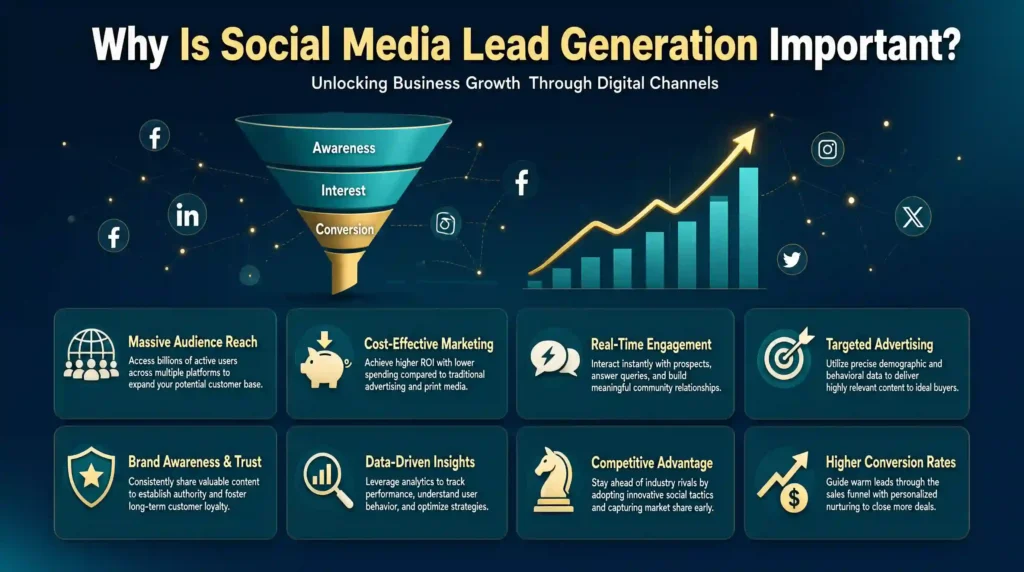
Social media gives businesses direct access to audiences who already spend time online. It also creates opportunities to introduce products, answer questions, and develop relationships before asking people to make a purchase.
Here are some important benefits.
1. Reach a Larger Target Audience
Platforms such as Facebook, Instagram, LinkedIn, and TikTok connect businesses with audiences across different locations and industries. Their targeting features also help advertisers reach people based on interests, demographics, professional roles, and online behavior.
2. Build Trust and Brand Awareness
People often research a business before making a purchase. Consistent social media activity helps brands demonstrate their expertise and communicate with potential customers.
For example, a software company can share product demonstrations, customer testimonials, and practical tutorials. This content helps people understand the product and builds confidence in the brand.
3. Generate Leads at Different Budget Levels
Businesses can generate leads through organic posts, educational videos, community discussions, and paid advertising.
Organic marketing allows businesses to attract attention without paying for every interaction. Meanwhile, paid campaigns can help them reach specific audiences and promote offers more quickly.
4. Improve Customer Relationships
Social media makes communication easier. Businesses can answer questions, respond to comments, and address customer concerns through direct messages.
These interactions help businesses understand customer needs and identify people who may want to purchase their products or services.
5. Track Marketing Performance
Most major social platforms provide analytics that help businesses understand audience engagement and campaign performance.
You can track metrics such as:
- Leads generated
- Cost per lead (CPL)
- Click-through rate (CTR)
- Conversion rate
- Engagement rate
These measurements help marketers identify successful campaigns and improve weaker strategies.
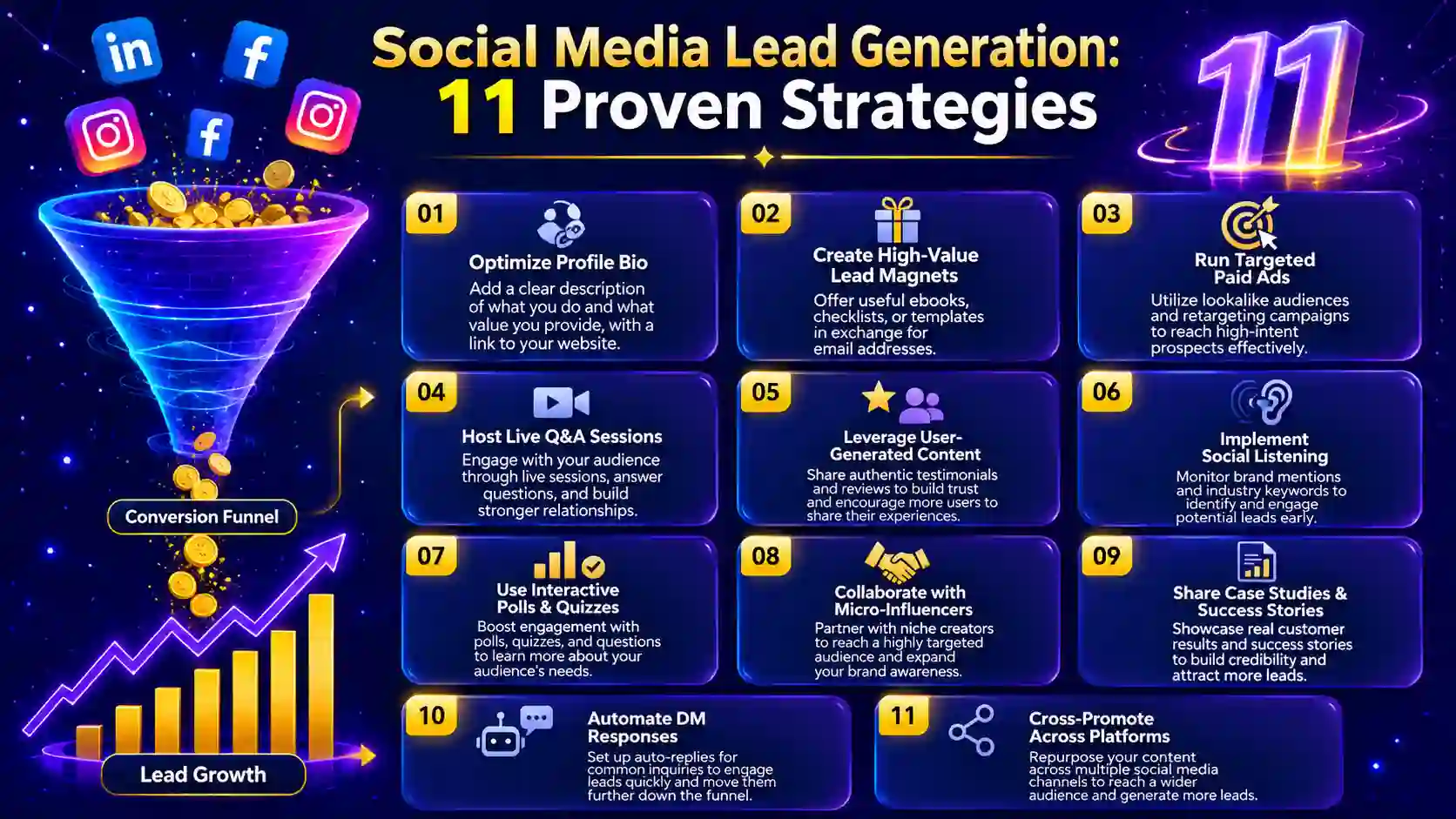
11 Proven Social Media Lead Generation Strategies
Businesses need more than frequent posting to attract potential customers. They should create valuable experiences that encourage people to interact with their brands and take meaningful actions.
The following social media lead generation strategies can help you attract relevant prospects and build a stronger marketing funnel.
1. Create Valuable Content for Your Target Audience
Useful content gives people a reason to follow your business, engage with your posts, and explore your products or services.
Start by identifying the questions, challenges, and interests of your target audience. Then create content that provides practical answers instead of focusing only on product promotion.
For example, a web design agency can publish posts about website speed, mobile-friendly design, and common website mistakes. These topics attract business owners who may need professional web development services.
Try these content formats:
- Educational posts and step-by-step guides
- Short videos and tutorials
- Industry tips and useful statistics
- Customer success stories
- Infographics and checklists
Always include a relevant call to action. You can invite readers to visit your website, download a free resource, or contact your team for more information.
2. Use Lead Magnets to Capture Potential Customers
A lead magnet is a free resource that businesses offer in exchange for a visitor’s contact information. It gives people something useful while helping businesses build their email lists.
This approach works well when your resource solves a specific problem for your target audience.
Popular lead magnet ideas include:
- Free ebooks and downloadable guides
- Industry reports and research
- Templates and checklists
- Free consultations
- Webinars and online workshops
- Product trials and demonstrations
For example, a digital marketing agency can create a free SEO checklist for small business owners. It can promote the resource through LinkedIn and Facebook posts and direct interested users to a landing page.
Keep your signup form simple. Ask only for the information you need, such as a name and email address. A straightforward process can encourage more visitors to complete the form.
3. Optimize Your Social Media Profiles
Your social media profile often creates the first impression of your business. A clear and professional profile helps visitors understand what you offer and how they can contact you.
Start by adding a recognizable profile picture, an attractive cover image, and a short business description. Explain your main services and highlight the benefits customers can expect.
Use these profile optimization tips:
- Add relevant keywords to your business description.
- Include your website link and contact information.
- Use a clear call to action in your bio.
- Pin important posts that explain your services.
- Add customer reviews and testimonials where supported.
- Keep your branding consistent across platforms.
For example, a marketing agency can use its Instagram bio to describe its SEO and content marketing services. It can also add a link to a consultation page where interested visitors can submit their details.
A well-optimized profile helps turn casual visitors into potential customers.
4. Run Targeted Social Media Advertising Campaigns
Paid advertising helps businesses reach specific audiences instead of relying only on organic content. Platforms such as Facebook, Instagram, and LinkedIn offer advertising options that support lead generation campaigns.
Before launching an advertisement, define your target audience and campaign objective. Consider factors such as location, interests, industry, job title, and customer needs.
You can use different advertising formats:
- Lead Form Ads: Collect contact information directly through platform-based forms.
- Carousel Ads: Display multiple products, services, or benefits in one advertisement.
- Video Ads: Explain your offer through short and engaging videos.
- Retargeting Ads: Reach people who previously visited your website or interacted with your content.
For example, a real estate agency can run Facebook lead ads that promote available properties. Interested users can submit their names, phone numbers, and preferred locations through an instant form.
However, avoid targeting everyone. Focus your advertising budget on audiences that match your ideal customer profile. Also, test different headlines, visuals, and calls to action to identify which advertisements generate better leads.
5. Use Social Listening to Find Potential Leads
Social listening helps businesses understand what people discuss about their industry, products, competitors, and customer problems.
Instead of waiting for customers to contact you, monitor relevant conversations and identify opportunities to offer helpful solutions.
For example, a business owner might post on LinkedIn asking for recommendations for an SEO agency. A marketing agency can join the conversation, provide useful advice, and introduce its services when relevant.
Here are some practical ways to use social listening:
- Monitor industry-related keywords and hashtags.
- Track mentions of your brand and competitors.
- Follow discussions in relevant Facebook groups.
- Identify common customer complaints and questions.
- Respond to people who actively seek recommendations.
- Monitor product reviews and industry discussions on Reddit.
You can also use social listening tools to monitor brand mentions and industry conversations. Focus on helping people rather than sending promotional messages to every user.
6. Collaborate With Influencers and Industry Experts
Influencer collaborations can introduce your business to audiences that already trust a particular creator or industry expert.
Choose influencers whose followers match your target customers. A large follower count does not always guarantee quality leads. Audience relevance, engagement, and credibility matter more.
Consider these collaboration ideas:
- Ask influencers to review your products.
- Organize joint webinars or live sessions.
- Create co-branded educational content.
- Share affiliate offers with relevant creators.
- Invite industry experts to discuss customer challenges.
For example, a skincare business can collaborate with a beauty creator who regularly shares skincare advice. The creator can explain the product’s features and direct interested followers to a dedicated landing page.
Use unique tracking links, discount codes, or campaign-specific forms to measure the leads each collaboration generates.
7. Create Engaging Videos, Reels, and Stories
Short-form videos help businesses communicate information quickly and capture audience attention. Instagram Reels, Facebook videos, YouTube Shorts, and TikTok videos offer opportunities to introduce products and encourage potential customers to take action.
Focus on topics that answer customer questions or demonstrate how your product solves a problem.
Try these video ideas:
- Quick tutorials and product demonstrations
- Before-and-after results
- Customer testimonials
- Frequently asked questions
- Behind-the-scenes business videos
- Expert tips and industry advice
For example, a software company can publish a short video showing how its tool simplifies a common business task. At the end, it can invite viewers to visit a landing page and request a free demo.
Keep your videos focused, use clear captions, and include one relevant call to action. You can also use stories to share limited-time offers, ask questions, and direct interested users to your website.
8. Use Contests and Giveaways to Attract Leads
Contests and giveaways can encourage people to interact with your brand and share your promotional content.
However, the prize should attract your ideal customers rather than random participants who only want free products.
For example, a digital marketing company can offer a free website SEO audit. This prize attracts business owners who already have an interest in improving their online visibility.
Follow these steps to organize a useful giveaway:
- Choose a prize that relates to your products or services.
- Set simple participation rules.
- Create an engaging promotional post.
- Add a clear entry deadline.
- Collect participant information through an appropriate form.
- Announce the winner and follow up with interested participants.
Always explain how you will use collected information. Follow the platform’s promotion rules and applicable privacy requirements.
9. Build Relationships Through Messaging Apps
Messaging apps allow businesses to communicate directly with potential customers. Facebook Messenger, Instagram Direct Messages, and WhatsApp Business can help answer questions, discuss products, and guide interested people toward a purchase.
For example, an online clothing store can use WhatsApp Business to answer questions about sizes, delivery options, and product availability.
You can use messaging channels to:
- Answer product and service questions.
- Share product catalogs and useful resources.
- Provide personalized recommendations.
- Schedule consultations or appointments.
- Send follow-up messages with customer permission.
- Guide interested users toward checkout or booking pages.
Keep conversations helpful and relevant. Ask questions to understand customer needs before recommending a product or service. Avoid sending repeated promotional messages without consent.
10. Turn Social Media Followers Into Email Subscribers
Social media platforms help businesses attract attention, but email marketing gives them another way to maintain direct communication with interested customers.
Encourage followers to join your email list by offering something valuable, such as a free guide, industry newsletter, discount, or exclusive resource.
Here are some practical ways to grow your email list:
- Share signup links in your social media bios.
- Promote free downloadable resources.
- Use LinkedIn posts to advertise webinars.
- Share newsletter highlights on Instagram and Facebook.
- Create landing pages for specific campaigns.
- Offer useful content that encourages subscriptions.
For example, a marketing consultant can publish a LinkedIn post about common SEO mistakes and invite readers to subscribe to a newsletter for weekly marketing tips.
Once someone joins your list, send useful information instead of constant sales messages. Personalized emails, educational resources, and relevant offers can help build stronger customer relationships.
11. Retarget and Nurture Interested Prospects
Not every person becomes a customer after the first interaction. Some visitors need more information, while others may compare different products before making a decision.
Retargeting helps businesses reconnect with people who previously visited their website, viewed products, or interacted with advertisements. Lead nurturing builds relationships with those prospects through relevant content and communication.
For example, an online store can show a reminder advertisement to visitors who viewed a product but did not complete their purchase.
You can improve your retargeting and nurturing efforts by:
- Creating audiences from previous website visitors.
- Showing relevant advertisements to interested users.
- Sharing customer reviews and product demonstrations.
- Sending helpful follow-up emails with permission.
- Offering consultations or product demonstrations.
- Providing answers to common purchase questions.
Use tools such as Meta Pixel and supported conversion tracking features to understand campaign activity. Always respect consent requirements and applicable privacy laws.
A consistent follow-up process helps businesses stay connected with potential customers and identify people who are ready to purchase.
Best Social Media Platforms for Lead Generation
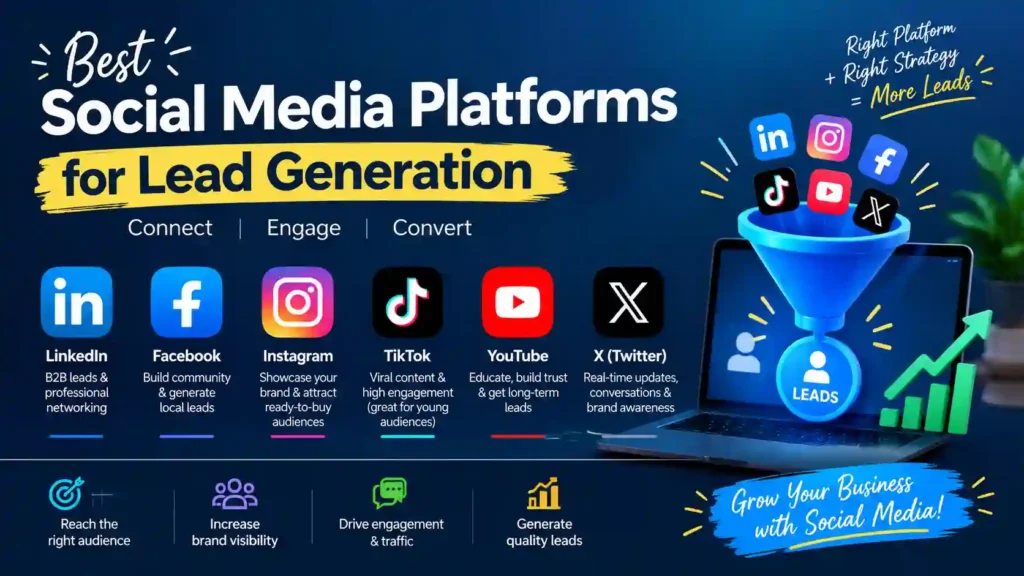
Choosing the right platform plays an important role in attracting potential customers. Each social network offers different features, audience types, and marketing opportunities. Therefore, businesses should select platforms according to their target audience, industry, and marketing goals.
Here are five popular platforms that businesses can use to generate leads.
Facebook Lead Generation Strategies
Facebook offers several features that help businesses connect with potential customers. Its advertising tools, business pages, groups, and lead forms create opportunities to attract people who show interest in specific products or services.
Try these Facebook lead generation methods:
- Create Facebook Lead Ads to collect customer information.
- Join relevant groups and participate in industry discussions.
- Publish educational posts and promotional videos.
- Share customer reviews and success stories.
- Use Messenger to answer questions and connect with prospects.
For example, a real estate agency can promote property listings through Facebook Lead Ads. Interested buyers can submit their contact details and request more information.
Instagram Lead Generation Strategies
Instagram works well for businesses that use visual content to attract and engage audiences. Reels, Stories, carousels, and direct messages help brands introduce products and communicate with potential customers.
Consider these approaches:
- Add a clear business description and website link to your bio.
- Publish informative Reels and carousel posts.
- Use Instagram Stories to promote offers and collect questions.
- Add relevant calls to action to your content.
- Collaborate with creators in your industry.
- Respond to inquiries through Instagram Direct Messages.
For example, a digital marketing agency can share short SEO tutorials and invite viewers to book a free consultation through its bio link.
LinkedIn Lead Generation Strategies
LinkedIn offers strong opportunities for B2B businesses, consultants, freelancers, and professional service providers. Its professional audience helps companies connect with decision-makers and identify potential business clients.
Use these LinkedIn methods:
- Optimize your personal and company profiles.
- Publish industry insights and educational articles.
- Share case studies and client success stories.
- Participate in relevant professional discussions.
- Use LinkedIn Lead Gen Forms for advertising campaigns.
- Connect with decision-makers in your target industry.
For example, a software development company can publish case studies about business automation. Interested business owners can contact its sales team to discuss their requirements.
TikTok Lead Generation Strategies
TikTok helps brands reach audiences through short videos, creative storytelling, and educational content. Businesses can use its video format to demonstrate products, answer customer questions, and introduce special offers.
Try these TikTok strategies:
- Create short product demonstration videos.
- Share helpful industry tips.
- Answer common customer questions.
- Collaborate with relevant creators.
- Use clear calls to action in videos.
- Direct interested viewers to your website or contact page.
For example, an online fitness business can share workout tutorials and invite viewers to explore its paid training programs.
Reddit Lead Generation Strategies
Reddit provides access to communities where people discuss products, services, problems, and industry experiences. Businesses can use these conversations to understand customer needs and identify relevant opportunities.
You can generate leads through Reddit by:
- Finding subreddits related to your industry.
- Answering questions with useful information.
- Sharing practical solutions to common problems.
- Participating in discussions without excessive promotion.
- Using Reddit Ads to reach relevant communities.
For example, a cybersecurity company can participate in discussions about website security and explain how businesses can protect their websites.
Focus on building credibility first. Reddit communities often reject promotional content that provides little value.
B2B and B2C Paid Social Media Lead Generation Platforms
Businesses should choose advertising platforms according to the customers they want to reach. B2B companies usually target professionals and decision-makers, while B2C companies focus on individual consumers.
Best Platforms for B2B Lead Generation
B2B businesses sell products or services to other businesses. Their sales process often involves multiple decision-makers, longer buying cycles, and detailed product research.
Consider these platforms:
- LinkedIn Ads: Reach professionals, business owners, and decision-makers through job titles, industries, and company information.
- Facebook Ads: Connect with business owners and promote webinars, consultations, and professional services.
- YouTube Ads: Share product demonstrations, tutorials, and educational videos.
- X Ads: Promote industry discussions, business updates, and relevant offers.
For example, a business software provider can use LinkedIn Ads to promote a free product demonstration to managers in its target industries.
Best Platforms for B2C Lead Generation
B2C businesses sell products and services directly to consumers. Their campaigns often focus on customer interests, shopping preferences, product benefits, and purchase decisions.
Popular options include:
- Facebook Ads: Promote products, special offers, and lead forms.
- Instagram Ads: Use visual advertisements to attract shoppers and encourage inquiries.
- TikTok Ads: Reach audiences through creative videos and product demonstrations.
- Pinterest Ads: Promote visual products and direct interested users to relevant landing pages.
For example, an online fashion store can use Instagram and Facebook advertisements to promote a new collection and encourage customers to explore its products.
Choose platforms based on your audience rather than trying to advertise everywhere. A focused campaign often makes budget management and performance analysis easier.
How AI Improves Social Media Lead Generation
Artificial intelligence helps businesses analyze audience behavior, create content, automate repetitive tasks, and improve marketing decisions. It also supports social media lead generation AI by helping marketers identify potential customers and personalize communication.
Here are some practical ways to use AI:
- AI-Powered Audience Research: AI tools can analyze customer feedback, engagement patterns, and audience interests. Marketers can use these insights to understand what their potential customers need.
- AI Content Creation: AI writing tools can help marketers generate post ideas, create captions, develop content outlines, and prepare campaign variations. However, review every AI-generated draft before publishing. Add accurate information, original examples, and your brand’s own perspective.
- AI Chatbots for Customer Communication: AI chatbots can answer common questions, guide visitors toward relevant resources, and collect basic inquiry details. For example, a website chatbot can ask visitors about their business needs and direct interested prospects to a consultation form.
- AI-Powered Lead Analysis: Some marketing and CRM platforms use AI features to analyze customer interactions and identify promising prospects. These insights can help sales teams prioritize follow-ups and focus on people who show stronger buying interest.
How to Measure Social Media Lead Generation Results
Generating leads is only one part of a successful campaign. Businesses also need to understand whether those leads show genuine interest and contribute to business growth.
Track these important metrics:
- Cost Per Lead (CPL): Cost per lead measures how much money your business spends to generate one lead.
- Formula: Cost Per Lead = Total Campaign Cost ÷ Number of Leads
- If you spend $500 on a campaign and generate 100 leads, your CPL equals $5.
- Conversion Rate: Conversion rate measures the percentage of visitors who complete a desired action, such as submitting a form or requesting a consultation.
- Formula: Conversion Rate = (Number of Conversions ÷ Total Visitors) × 100
- If 50 out of 1,000 visitors submit a contact form, your conversion rate equals 5%.
- Click-Through Rate (CTR): CTR measures the percentage of people who click your advertisement or link after viewing it.
- Formula: CTR = (Total Clicks ÷ Total Impressions) × 100
- A higher CTR can indicate that your advertisement attracts audience interest.
- Return on Ad Spend (ROAS): ROAS measures the revenue your business earns from advertising compared with its advertising costs.
- Formula: ROAS = Revenue From Ads ÷ Advertising Cost
- If an advertisement generates $2,000 in revenue from a $500 advertising budget, your ROAS equals 4.
Lead Quality
Lead quality helps businesses understand whether generated leads match their ideal customer profile and show genuine purchase interest.
Review factors such as:
- Customer requirements
- Budget and purchasing ability
- Industry relevance
- Level of interest
- Sales conversion potential
Use these metrics together to evaluate campaign performance. A campaign that generates fewer but more qualified leads may deliver better business results than one that attracts many uninterested users.
Best Social Media Lead Generation Tools
The right tools can help businesses manage content, monitor conversations, collect customer information, and measure campaign performance.
Here are some useful options:
Social Media Management Tools
- Hootsuite: Helps manage social accounts, schedule content, and monitor activity.
- Buffer: Supports content scheduling and social media publishing.
- Sprout Social: Provides social media management and reporting features.
Lead Capture and CRM Tools
- HubSpot: Helps manage contacts, track customer interactions, and organize marketing activities.
- Zoho CRM: Supports lead management and sales processes.
- Salesforce: Offers customer relationship management and sales automation features.
AI and Content Creation Tools
- ChatGPT: Helps generate content ideas, captions, outlines, and marketing drafts.
- Canva: Supports the creation of social media graphics and promotional designs.
- Manychat: Helps automate conversations through supported messaging channels.
Choose tools that match your business size, budget, and marketing requirements. You do not need every tool to build an effective lead generation system.
Common Social Media Lead Generation Challenges
Social media offers many opportunities, but businesses can face challenges when they try to attract qualified customers.
Here are some common problems and practical solutions.
- Attracting the Wrong Audience: Some campaigns generate clicks and engagement but fail to attract potential buyers.
Define your ideal customer profile and refine audience targeting.
- Low Engagement: People may ignore promotional posts that offer little value.
Publish useful content, ask relevant questions, and encourage meaningful discussions.
- Poor Lead Quality: A large number of inquiries does not always result in sales.
Use relevant lead forms and ask questions that help identify genuine prospects.
- Slow Follow-Ups: Potential customers may lose interest when businesses take too long to respond.
Set up a clear follow-up process and respond to inquiries promptly.
- Difficulty Measuring Results: Businesses sometimes focus on followers and likes instead of actual leads and conversions.
Track CPL, conversion rate, lead quality, and revenue from campaigns.
Social Media Lead Generation and Privacy Laws
Businesses collect personal information when people submit contact forms, join email lists, or request product demonstrations. Therefore, they must handle customer information responsibly.
Privacy requirements vary by location. Businesses should understand the rules that apply to their customers and marketing activities.
- Protect Customer Information: Collect only the information your business needs. Use secure systems to store customer details and limit access to authorized team members.
- Obtain Proper Consent: Explain why you collect contact information and how you plan to use it. Give people a clear way to manage their marketing preferences and unsubscribe from promotional emails.
- Follow Platform Advertising Policies: Each social platform has its own advertising and data collection requirements. Review the relevant policies before launching lead generation campaigns.
Frequently Asked Questions About Social Media Lead Generation
1. What Is Lead Generation in Social Media Marketing?
Lead generation in social media marketing involves attracting potential customers through social networking platforms and encouraging them to share their contact details or express interest in a business.
2. What Is a Lead Generation Strategy?
A lead generation strategy is a planned approach that helps businesses attract potential customers, collect their information, and guide them toward a purchase. It can include content marketing, paid advertising, email campaigns, and social media promotions.
3. Which Social Media Platform Is Best for Lead Generation?
The best platform depends on your target audience and business model. LinkedIn often suits B2B companies, while Facebook and Instagram offer useful opportunities for B2C businesses. TikTok and Reddit can also help brands reach relevant communities.
4. How Can Beginners Generate Leads on Social Media?
Beginners can start by choosing one or two relevant platforms, optimizing their profiles, publishing useful content, and adding clear calls to action. They can also offer free resources to encourage interested users to join their email lists.
5. What Type of Content Generates the Most Leads?
Educational videos, product demonstrations, customer testimonials, downloadable guides, and case studies can attract potential customers. The best format depends on your audience and the problems your business solves.
6. How Much Does Social Media Lead Generation Cost?
The cost depends on your platform, audience, industry, advertising budget, and campaign objectives. Organic content can attract leads without direct advertising costs, while paid campaigns require a budget for promotion and testing.
Conclusion
Social media provides businesses with valuable opportunities to connect with potential customers and grow their online presence. As a result, successful lead generation requires more than publishing regular posts or increasing follower counts.
The right Social Media Lead Generation Strategies help businesses attract relevant audiences, build trust, encourage meaningful interactions, and turn interested people into potential customers.
Start by choosing platforms that match your target audience. To begin create useful content, optimize your profiles, experiment with lead magnets, and track your campaign performance. Correction You can also use AI tools, CRM platforms, and marketing automation to improve your workflow.</span>