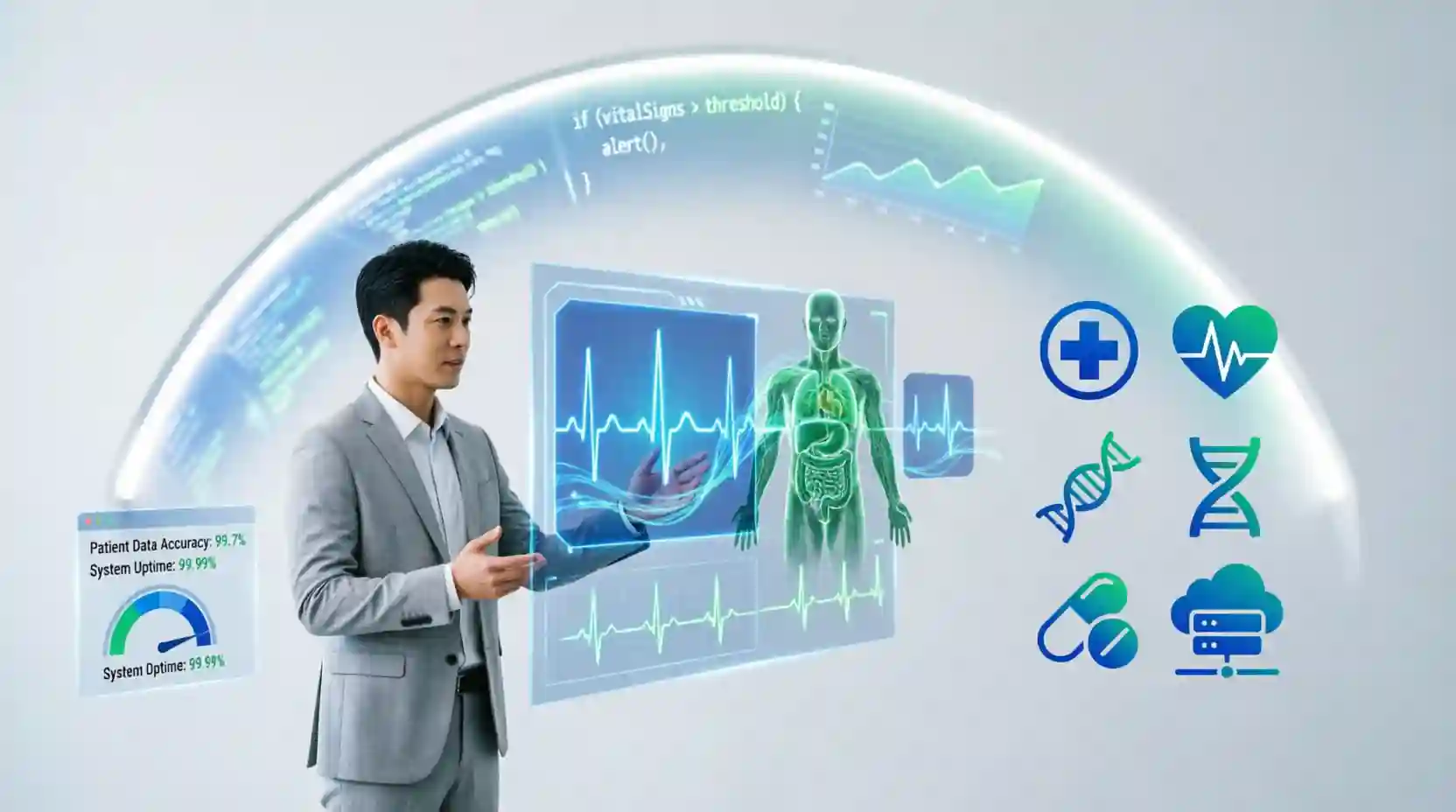
Custom Healthcare Software Development organizations rely on digital tools to manage patient information, improve communication, support clinical teams, and streamline daily operations. Standard software can handle basic tasks, but many healthcare providers need solutions that match their specific workflows and business goals. This need has increased interest in custom healthcare software development.
Custom software allows healthcare organizations to build features around their actual requirements instead of changing their processes to fit a ready-made platform. A custom solution can support patient management, telemedicine, electronic health records, healthcare analytics, billing, scheduling, and other important operations.
What Is Custom Healthcare Software Development?
Custom healthcare software development involves creating a digital solution specifically for a healthcare organization, medical practice, hospital, clinic, or health-tech business. Developers design the software around the organization’s workflows, users, data requirements, and operational goals.
For example, a clinic may need software that combines appointment scheduling, patient records, billing, doctor availability, and patient communication in one platform. A hospital may need a more advanced system that connects multiple departments and integrates with existing healthcare technologies.
What Is Software Development in Healthcare?
Software development for healthcare refers to the process of designing, building, testing, and maintaining digital products that support healthcare-related activities. These products can serve doctors, nurses, administrators, patients, laboratories, pharmacies, and other healthcare professionals.
Healthcare software can support tasks such as:
- Managing electronic health records
- Scheduling appointments
- Conducting virtual consultations
- Monitoring patients remotely
- Processing medical billing
- Managing hospital operations
- Analyzing healthcare data
- Communicating with patients
- Supporting clinical decisions
Custom development takes this process further by creating software around the specific needs of an organization.
What Is Custom Software Development?
Custom software development means building software specifically for a particular business or organization. Instead of giving every customer the same features, developers create a solution that matches the client’s requirements.
For healthcare organizations, this approach can provide greater control over workflows, integrations, security requirements, and future improvements. Organizations can also add or remove features as their needs change.
Benefits of Custom Healthcare Software Development
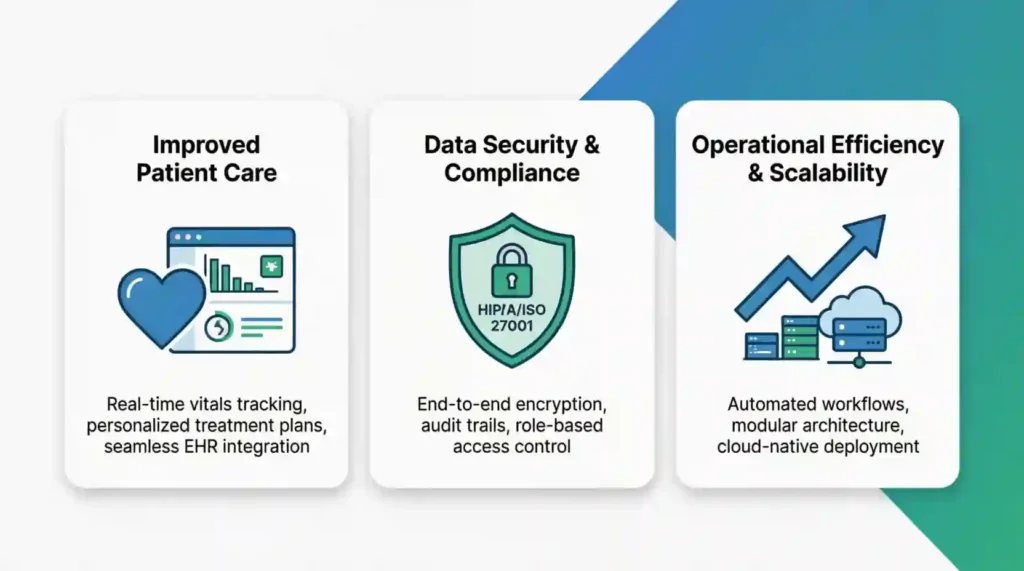
Healthcare organizations face different operational challenges, so one standard platform may not work equally well for every provider. Custom software can address specific requirements and create a more suitable digital environment.
- Better Workflow Management: Custom software can follow the exact workflow of a healthcare organization. Teams can access the features they need without moving between unnecessary tools.
- Improved Patient Experience: Healthcare providers can design digital experiences around patient needs. A custom platform can include online appointments, patient portals, reminders, telehealth features, secure messaging, and access to relevant medical information.
- Flexible Features and Scalability: Healthcare organizations often grow over time. Their software needs can change as they add new services, locations, departments, or users.
- Integration With Existing Systems: Healthcare organizations often use several digital systems at the same time. Custom software can connect with existing platforms through APIs and other integration methods.
- Stronger Control Over Data and Security: Healthcare software handles sensitive information, so organizations need strong security controls. A custom solution gives the organization greater control over user permissions, authentication, access levels, audit records, and other security features.
- Support for Business-Specific Requirements: Every healthcare organization has its own goals and processes. A hospital, private clinic, diagnostic center, and telemedicine company may all require different software features.
Types of Custom Healthcare Software Development
Healthcare organizations use different types of digital solutions based on their services, users, and operational needs. A custom platform can focus on one specific function or combine several healthcare operations in a single system.
- Electronic Health Record Software: Electronic Health Record (EHR) software helps healthcare providers manage patient information digitally. A custom EHR system can organize medical histories, diagnoses, medications, test results, treatment plans, and other relevant records.
- Hospital Management Software: Hospitals manage many departments, employees, patients, appointments, and administrative activities. Hospital management software can bring these operations together through a centralized platform.
- Telemedicine Software: Telemedicine platforms allow healthcare providers to deliver consultations through digital channels. A custom telemedicine solution can include video consultations, appointment scheduling, secure messaging, digital prescriptions, patient profiles, and payment features.
- Patient Portal Software: Patient portals give patients a secure way to interact with healthcare providers online. A custom portal can allow users to schedule appointments, view medical information, receive reminders, communicate with providers, and access documents.
- Healthcare Mobile Applications: Mobile applications can support both patients and healthcare professionals. Patient-focused apps may offer appointment booking, medication reminders, health tracking, or communication tools.
- Healthcare Analytics Software: Healthcare analytics platforms help organizations collect and understand operational and clinical data. A custom analytics solution can provide dashboards and reports based on the metrics that matter to a specific organization.
- For example, a hospital may track patient volume, appointment patterns, resource usage, or department performance.
- Medical Billing and Practice Management Software: Medical billing software helps organizations manage invoices, claims, payments, and financial records. Practice management systems can combine billing with scheduling, patient management, staff coordination, and administrative tasks.
- Remote Patient Monitoring Software: Remote patient monitoring solutions allow healthcare providers to collect health information from patients outside traditional clinical settings. These systems can support data collection from connected devices and provide healthcare teams with relevant information.
Custom Healthcare Software Development vs. Off-the-Shelf Software
Healthcare organizations generally have two choices when they need digital software: they can purchase an existing platform or invest in a custom solution.
Off-the-shelf software provides prebuilt features for a broad group of users. Custom healthcare software development creates a solution around the specific requirements of one organization.
What Is Off-the-Shelf Healthcare Software?
Off-the-shelf software comes with predefined features and workflows. Healthcare providers can usually subscribe to or purchase the platform and start using it with limited customization.
This option can work well for organizations that need standard features and want a faster setup.
However, predefined software may not match every workflow. Organizations may need to change their processes or purchase additional tools when the platform lacks a required feature.
Advantages of Custom Software
Custom software offers greater flexibility. Organizations can select the features, workflows, integrations, and user roles that match their needs.
It can also support long-term growth. Developers can add new functions as the organization expands or changes its services.
Other potential advantages include:
- Greater control over features
- Flexible user roles and permissions
- Integration with existing systems
- Customized patient experiences
- Scalable architecture
- Organization-specific reporting
- Better alignment with internal workflows
Advantages of Off-the-Shelf Software
Off-the-shelf platforms can offer a practical solution when an organization has straightforward requirements. They often require less initial development work and can provide commonly used features from the start.
Organizations may prefer this approach when they need:
- Faster implementation
- Standard healthcare functions
- Predictable subscription costs
- Minimal development work
- A solution for common operational tasks
Which Option Should Healthcare Organizations Choose?
The right choice depends on the organization’s requirements, budget, workflow, and long-term goals.
Off-the-shelf software may suit a healthcare provider with standard needs. Custom development may make more sense when existing platforms cannot support important workflows, integrations, security requirements, or growth plans.
Organizations should compare both options before making a decision. They should consider not only the initial cost but also customization, integration, maintenance, scalability, security, and long-term value.
Custom Healthcare Software Development Process
A successful healthcare software project needs a clear development process. Developers and healthcare organizations should define the project goals, understand user requirements, plan the technology, build the solution, test every major function, and continue improving the platform after launch.
A structured process can reduce development risks and help teams create software that supports real healthcare workflows.
1. Requirement Analysis
The development process starts with understanding the organization’s needs. The team identifies the target users, business goals, workflows, required features, existing systems, and technical requirements.
For example, a hospital may need software for patient management, scheduling, billing, reporting, and department coordination. A telemedicine provider may focus more on virtual consultations, patient communication, and digital payments.
The team should also identify security and compliance requirements at this stage.
2. Planning and Software Design
After gathering requirements, the team creates a project plan and defines the software architecture. Designers also create the user interface and user experience based on the needs of healthcare professionals and patients.
A good design should make important information easy to find. It should also reduce unnecessary steps for users who perform repetitive healthcare tasks.
3. Development
Developers then build the software according to the approved requirements and design. They create the required features, database structure, integrations, user roles, and other technical components.
Development teams often work in smaller stages instead of building the entire platform at once. This approach allows them to test features earlier and make improvements throughout the project.
4. Testing and Quality Assurance
Healthcare software needs thorough testing because errors can affect operations, data, and user experience.
Quality assurance teams can test:
- Functionality
- Performance
- Security
- User permissions
- Data handling
- System integrations
- Mobile responsiveness
- Compatibility
- Error handling
Teams should fix important issues before they release the software to users.
5. Deployment and Integration
After testing, the team prepares the software for deployment. Developers may connect the new platform with existing healthcare systems, databases, APIs, devices, or third-party services.
The organization should also prepare users for the transition. Training, documentation, and technical support can help employees understand the new system.
6. Maintenance and Updates
Development does not end after launch. Healthcare organizations may need new features, security updates, performance improvements, and integrations as their requirements change.
Regular maintenance helps keep the platform useful, secure, and compatible with changing technologies.
Custom Healthcare Software Development: Security and Compliance
Security plays a central role in healthcare software because these platforms can handle sensitive patient and medical information. Organizations need strong controls to protect data from unauthorized access, loss, and misuse.
- Data Protection: Healthcare platforms should protect sensitive information during storage and transmission. Encryption can help protect data while it moves between systems and while the platform stores it.
- User Authentication and Access Control: Healthcare software can include multiple user roles, such as doctors, nurses, administrators, technicians, and patients. Each role may require different permissions.
- Audit Trails: Audit trails can record important activities within a healthcare platform. They can show who accessed information, what actions they performed, and when those actions occurred.
- Compliance Requirements: Healthcare software may need to follow regulations and industry standards based on its location, services, users, and data.
- For example, healthcare organizations in the United States often need to consider HIPAA requirements when their systems handle protected health information.
- Secure Integrations: Healthcare platforms often exchange information with other systems. Each connection creates another area that developers need to secure.
- Developers should use secure APIs, authentication methods, access controls, and appropriate data-handling practices when connecting healthcare applications.
Key Considerations for Custom Healthcare Software Development
Organizations should evaluate several factors before they begin development. A clear plan can help control costs and reduce unnecessary changes during the project.
- Define the Main Business Problem: Start with the problem instead of the technology. Identify what the organization wants to improve and which users need the solution.
- Identify Essential Features: Not every feature needs to launch on day one. Organizations can prioritize essential functions and add advanced features in later development stages.
- Consider Integration Requirements: If the new platform needs to connect with EHR systems, payment platforms, medical devices, or other applications, the team should identify these requirements early.
- Plan for Scalability: The software should support future growth. Organizations should consider expected increases in users, data, locations, services, and integrations.
- Choose the Right Development Partner: A custom healthcare software development company should understand both software engineering and healthcare requirements. Before selecting a partner, organizations should review its technical experience, healthcare projects, security practices, communication process, and support options.
Cost of Custom Healthcare Software Development
The cost of custom healthcare software development depends on the project’s size, features, integrations, security requirements, and development team.
- Software Features: More features usually require more development time. A basic patient portal may include appointment scheduling and messaging, while a larger healthcare platform may include electronic health records, billing, analytics, telemedicine, and remote monitoring.
- Software Complexity: Complex workflows require more planning, development, testing, and maintenance. Healthcare organizations should define their core requirements before requesting development estimates.
- Integrations: Connecting healthcare software with existing systems can increase project complexity. Developers may need to integrate EHR platforms, payment gateways, laboratory systems, APIs, medical devices, or other business applications.
- Security Requirements: Healthcare applications need strong security controls because they can manage sensitive information. Authentication, access control, encryption, monitoring, and security testing can add to development requirements.
- Development Team: The location, experience, and structure of the development team can also affect the budget. A healthcare organization may work with an in-house team, a freelance developer, or a custom healthcare software development company.
Instead of focusing only on the initial price, organizations should consider the software’s long-term value, maintenance requirements, scalability, and security.
Trends in Custom Healthcare Software Development
Technology continues to change how healthcare organizations manage information and interact with patients. Several trends can influence the future of software development for healthcare.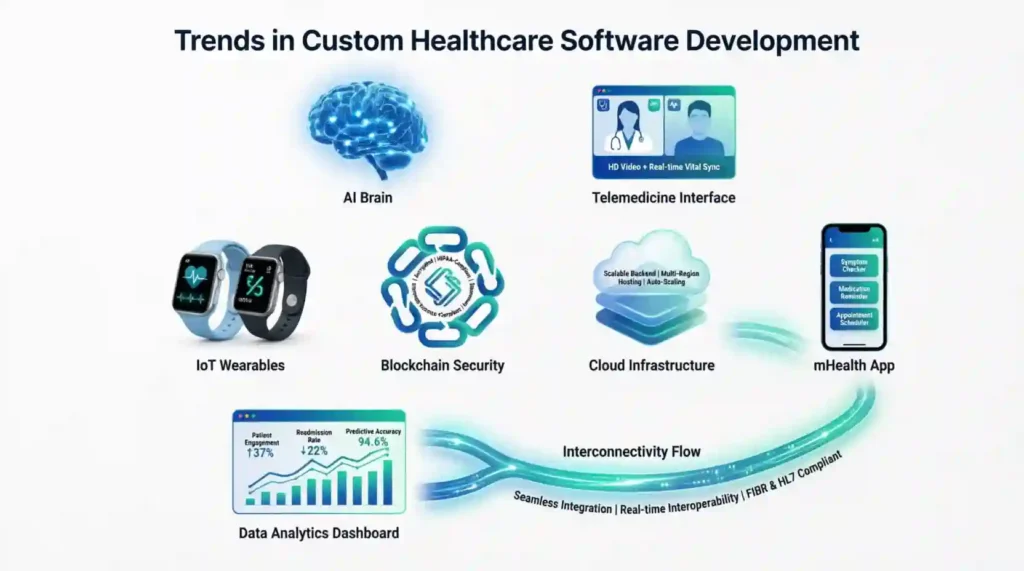
- Artificial Intelligence: AI can help healthcare organizations analyze large amounts of information, automate repetitive tasks, support administrative workflows, and improve decision-making processes.
- Telemedicine: Telemedicine software allows healthcare providers to communicate with patients through digital platforms. Video consultations, appointment scheduling, secure messaging, and digital records can support remote healthcare services.
- Remote Patient Monitoring: Connected devices can collect information such as heart rate, blood pressure, glucose levels, and other health-related measurements.
- Healthcare Analytics: Healthcare organizations generate large amounts of data through patient records, appointments, billing systems, and other digital tools.
- Interoperability: Healthcare organizations often use multiple software systems. Interoperability helps these systems exchange information more effectively.
- Standards such as HL7 and FHIR can support healthcare data exchange between compatible systems. Developers should consider interoperability early when planning healthcare custom software development.
- Cloud-Based Healthcare Software: Cloud technology can help organizations access applications and data across different locations. Cloud platforms can also support scalability and centralized system management.
Custom Healthcare Software Development FAQs
What Is Software Development in Healthcare?
Software development in healthcare involves designing, building, testing, deploying, and maintaining digital solutions for healthcare organizations, professionals, and patients.
These solutions can include EHR systems, telemedicine platforms, patient portals, hospital management systems, healthcare mobile apps, billing software, and analytics platforms.
What Is Custom Software Development?
Custom software development involves creating software according to the specific requirements of an organization instead of using a standard product with fixed features.
In healthcare, custom development can help organizations create workflows, integrations, security controls, and features that match their operational needs.
What Is SDLC in Healthcare?
SDLC stands for Software Development Life Cycle. It describes the stages teams follow to plan, create, test, deploy, and maintain software.
A healthcare SDLC can include requirement analysis, planning, design, development, testing, deployment, and ongoing maintenance.
Healthcare organizations should also consider security, privacy, compliance, interoperability, and user needs throughout the development life cycle.
Final Thoughts on Custom Healthcare Software Development
Custom Healthcare Software Development can help healthcare organizations create digital solutions that match their specific workflows and long-term goals.
Unlike standard software, custom solutions can provide greater flexibility for specialized requirements. Organizations can develop platforms for patient management, telemedicine, analytics, billing, remote monitoring, and many other healthcare needs.
However, successful development requires more than building useful features. Organizations should also prioritize security, compliance, integration, scalability, usability, and ongoing maintenance.
Before starting a project, clearly define the main problem, identify essential features, evaluate integration requirements, and choose a development partner with relevant healthcare experience.
With the right strategy, custom healthcare software development services can help organizations improve workflows, support better digital experiences, and build technology that grows with their changing needs.