B2B Content Marketing Consultant helps businesses attract potential clients, build brand authority, and generate qualified leads through valuable content. Business-to-business companies need more than regular blog posts or social media updates. They need a clear content strategy that reaches decision-makers and supports their buying journey.
Many companies struggle to create content that attracts the right audience. Some publish articles without proper keyword research, while others fail to connect their content with business goals. A skilled consultant can identify these gaps and develop a strategy that improves search visibility, audience engagement, and conversions.
1. What Is a B2B Content Marketing Consultant?
A B2B content marketing consultant is a professional who helps businesses plan, create, optimize, and distribute content for other businesses. Their main goal is to connect a company’s products or services with the needs of potential customers.
Unlike general content writers, these consultants focus on business goals, customer research, and marketing performance. They understand how business buyers research solutions, compare providers, and make purchasing decisions.
Content Marketing for Consultants
Content marketing for consultants focuses on sharing expertise and building trust with potential clients. Consultants can use educational articles, industry insights, and practical guides to demonstrate their knowledge.
A strong content strategy can help consulting professionals:
- Attract potential business clients.
- Build authority in their industry.
- Explain complex services in simple language.
- Generate qualified inquiries.
- Develop long-term relationships with customers.
2. What Does a B2B Content Marketing Consultant Do?

A B2B content marketing consultant manages several activities that support a company’s marketing goals. They study the target audience, research relevant keywords, plan content topics, and improve existing marketing materials.
Here are some important responsibilities.
Developing a B2B Content Marketing Strategy
A successful content strategy starts with clear business objectives. The consultant identifies what a company wants to achieve, such as increasing organic traffic, generating leads, or improving brand awareness.
They also research competitors and identify content gaps. This process helps businesses publish useful information that answers customer questions and supports purchasing decisions.
Identifying Target Audiences and Buyer Personas
B2B companies often sell products or services to multiple decision-makers. A consultant researches their audience’s industries, job roles, challenges, and purchasing priorities.
This research helps businesses create content that speaks directly to potential customers. It also helps marketers choose suitable topics and communication channels.
Creating High-Quality B2B Content
A consultant plans content that educates readers and supports business goals. Depending on the audience, they may recommend:
- Blog posts and educational guides.
- Industry reports and whitepapers.
- Customer success stories.
- Email newsletters.
- Case studies and comparison articles.
Each content format serves a different purpose. For instance, blog posts attract readers through search engines, while case studies show how a company solves real business problems.
SEO and Keyword Research
Search engine optimization helps B2B companies reach people who actively search for relevant products, services, and solutions.
A consultant researches search terms, studies competitor content, and recommends relevant topics. They also improve headings, page titles, internal links, and content structure.
These improvements help search engines understand website content and help readers find useful information.
Content Publication and Promotion
Publishing an article is only one part of content marketing. Businesses also need to share their content through suitable channels.
A consultant may recommend:
- LinkedIn posts for professional audiences.
- Email campaigns for existing subscribers.
- Industry publications for wider exposure.
- Relevant online communities for audience engagement.
- Search engine optimization for long-term organic traffic.
3. How a B2B Content Marketing Consultant Helps Grow Your Business
A well-planned content strategy can support business growth by attracting relevant visitors and turning their interest into valuable leads. A consultant connects content activities with measurable marketing objectives.
- Generating Qualified B2B Leads: Useful content attracts people who already have questions about a product or service. A consultant creates resources that address those questions and encourages interested readers to take the next step.
- Building Brand Authority and Trust: Business buyers often research several providers before making a decision. Consistent, informative content helps a company demonstrate its experience and knowledge.
- Improving Website Traffic and Conversions: A consultant uses keyword research and content optimization to attract relevant organic visitors. They also review content structure, user experience, and calls to action.
Supporting the B2B Buyer Journey
B2B purchasing decisions often involve research, evaluation, and approval from multiple people. Each stage requires different information.
A consultant can develop content for every stage:
- Awareness: Educational blog posts that explain common industry problems.
- Consideration: Comparison guides, webinars, and detailed service articles.
- Decision: Case studies, product demonstrations, and customer testimonials.
This approach helps businesses answer customer questions throughout the buying process.
4. Effective B2B Content Marketing Strategies
B2B companies need a consistent approach to reach business buyers and build meaningful relationships. The right content formats can educate potential customers, demonstrate expertise, and support lead generation.
Here are some effective strategies businesses can use.
- Blog Posts and Educational Articles: Blog posts help businesses answer industry-related questions and attract organic search traffic. Companies can publish how-to guides, industry updates, tutorials, and informative articles that address customer challenges.
- Case Studies and Whitepapers: Case studies show how a business solves real customer problems. They help potential clients understand the value of a product or service through practical examples.
- Email Marketing and Newsletters: Email marketing helps businesses maintain relationships with subscribers and potential customers. Companies can share educational content, product updates, industry news, and useful resources through regular newsletters.
LinkedIn and Social Media Content
LinkedIn gives B2B companies an opportunity to connect with professionals, decision-makers, and industry leaders. Businesses can share articles, expert opinions, company updates, and customer success stories.
Content ideas for marketing agencies include:
- Sharing practical marketing tips.
- Publishing client success stories.
- Creating industry trend reports.
- Posting educational carousel content.
- Sharing answers to common customer questions.
These ideas can also help consulting firms demonstrate their expertise and attract potential clients.
5. Common B2B Content Marketing Mistakes and How to Fix Them
Even experienced businesses can struggle with content marketing when they lack a clear strategy. Identifying common mistakes helps companies improve their content quality and marketing performance.
Targeting the Wrong Audience
The Mistake: Some companies create content for a broad audience without understanding their ideal customers. This approach can attract visitors who have little interest in their services.
The Solution: Research customer needs, job roles, industries, and purchasing challenges. Develop buyer personas and choose topics that match their interests.
Publishing Content Without an SEO Strategy
The Mistake: Publishing articles without keyword research can make it difficult for search engines and potential customers to find them.
The Solution: Research relevant search terms before creating content. Use descriptive titles, helpful headings, natural keywords, and relevant internal links.
Creating Content Without Clear CTAs
The Mistake: Some articles provide useful information but fail to guide readers toward the next step.
The Solution: Add relevant calls to action (CTAs). Encourage readers to explore a service, download a guide, subscribe to a newsletter, or contact your team.
Ignoring Content Performance and Analytics
The Mistake: Businesses sometimes publish content regularly without checking whether it attracts visitors or generates leads.
The Solution: Track organic traffic, engagement, conversions, and keyword performance. Use these insights to update existing articles and improve future campaigns.
6. How to Hire the Right B2B Content Marketing Consultant
Choosing the right professional can help businesses build a stronger content strategy and avoid unnecessary marketing expenses. However, companies should evaluate a consultant’s experience, skills, and working approach before making a decision.
- Define Your Business Goals: Start by identifying what you want to achieve. You may want more organic traffic, qualified leads, better brand visibility, or improved content performance.
- Review Experience and Previous Results: Check the consultant’s portfolio, previous projects, and industry experience. Look for examples of blog content, SEO improvements, case studies, and successful campaigns.
Evaluate Their Content Marketing Skills
A reliable consultant should understand several areas of digital marketing, including:
- Content strategy and planning.
- Keyword research and SEO.
- Audience and competitor research.
- Content writing and editing.
- Content distribution.
- Performance tracking and analytics.
These skills help consultants manage different stages of a content marketing campaign.
Compare Services and Pricing
Review the services included in each proposal. Some professionals provide strategic guidance, while others also handle content creation, SEO, and campaign management.
Compare the expected results, project scope, communication process, and pricing before choosing a consultant.
7. How Much Does a B2B Content Marketing Consultant Cost?
The cost of hiring a content marketing consultant depends on experience, project complexity, required services, and pricing structure. Some professionals charge hourly rates, while others offer monthly packages or project-based services.
- Hourly Consulting Rates: Hourly pricing works well for businesses that need specific advice, content audits, or short-term strategy support. The total cost depends on the consultant’s experience and the number of hours required.
- Monthly Retainer Pricing: A monthly retainer suits businesses that need ongoing content planning, SEO guidance, performance reviews, and marketing support. This arrangement gives companies consistent access to professional expertise and helps consultants understand their long-term goals.
- Project-Based Pricing: Project-based pricing works for specific tasks, such as developing a content strategy, conducting keyword research, or creating a complete content plan. Businesses’ should review the project scope and deliverables before agreeing to a price.
What Affects Content Marketing Consultant Costs?
Several factors influence consulting fees:
- Consultant experience and expertise.
- Number of content pieces required.
- SEO and research requirements.
- Project duration and complexity.
- Content creation and management responsibilities.
Compare proposals based on the value and services they provide rather than choosing the cheapest option.
8. B2B Content Marketing Consultant vs. Marketing Agency
Businesses often compare independent consultants with marketing agencies before choosing a content marketing partner. Both options can support business growth, but they offer different levels of service and expertise.
Key Differences Between Consultants and Agencies
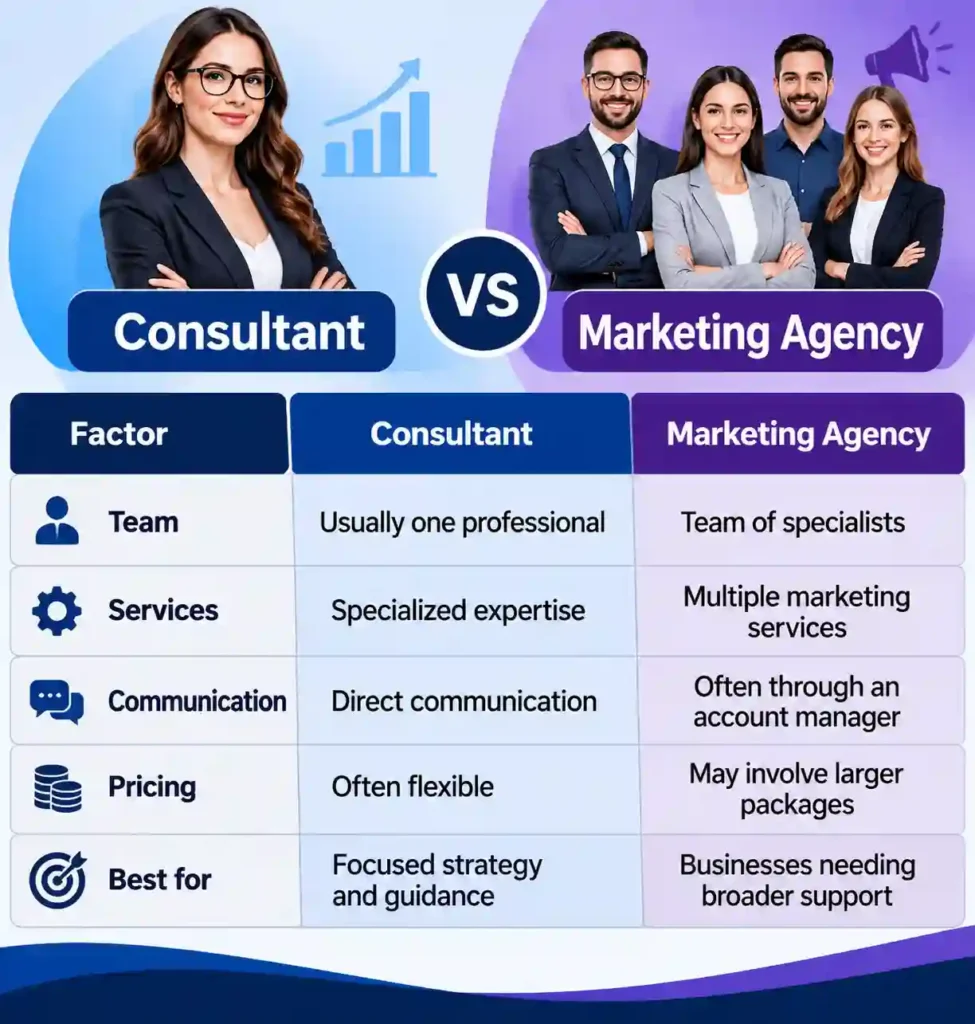
A content marketing consultant usually provides strategic guidance, specialized expertise, and personalized recommendations. Some consultants also manage content creation and marketing activities.
A marketing agency typically offers a team of professionals who handle multiple services, such as SEO, content writing, social media management, and paid advertising.
Here are the main differences:
Which Option Is Better for Your Business?
Choose a consultant if your business needs expert advice, a focused content strategy, or help improving existing marketing activities.
An agency may suit your needs if you require several marketing services and a team to manage different campaigns.
Review your goals, budget, and available resources before making a decision.
9. Frequently Asked Questions About Content Marketing Consultants
What Is a Content Marketing Consultant?
A content marketing consultant helps businesses plan, develop, optimize, and distribute valuable content. They create strategies that attract relevant audiences, build brand authority, and support business growth.
What Does a B2B Content Marketing Consultant Do?
A B2B content marketing consultant researches business audiences, develops content strategies, conducts keyword research, and improves content performance. They also help companies attract qualified leads and reach business decision-makers.
How Much Does a Content Marketing Consultant Cost?
The cost depends on experience, project requirements, and service scope. Consultants may charge hourly rates, monthly retainers, or project-based fees. Businesses should compare services and deliverables before selecting a professional.
Why Should a Business Hire a Content Marketing Consultant?
A consultant brings specialized knowledge and helps businesses create a clear content strategy. Their guidance can improve SEO, strengthen brand authority, attract relevant visitors, and support lead generation.
What Skills Should a Content Marketing Consultant Have?
A skilled consultant should understand content strategy, SEO, keyword research, audience analysis, content writing, and marketing analytics. Strong communication and research skills also help them develop effective campaigns.
How Long Does B2B Content Marketing Take to Show Results?
The timeline depends on competition, content quality, website authority, and marketing consistency. Some campaigns may generate engagement and inquiries within a few months, while organic search growth often requires a longer-term commitment.
What Is the Difference Between B2B and B2C Content Marketing?
B2B content marketing targets businesses and professional decision-makers. It often focuses on industry knowledge, business challenges, and long-term value. B2C content marketing targets individual consumers and often focuses on personal needs, product benefits, and purchasing decisions.
How to Become a Content Marketing Consultant?
Start by learning content strategy, SEO, keyword research, and digital marketing. Build a portfolio with practical projects, develop your writing and analytical skills, and gain experience working with businesses. You can also specialize in an industry or content marketing service to strengthen your professional profile.
10. Final Thoughts: Build a Stronger B2B Content Marketing Strategy
A successful B2B content marketing strategy requires clear goals, audience research, valuable content, and consistent performance tracking. Businesses need content that answers customer questions, demonstrates expertise, and supports purchasing decisions.
A skilled consultant can help companies identify content opportunities, improve SEO, and develop marketing strategies that attract qualified leads.
Before hiring a professional, review your business goals, budget, and required services. Choose someone who understands your audience and can connect content activities with measurable business results.
With the right approach, B2B companies can build stronger relationships, improve online visibility, and create long-term growth opportunities.